
BACK TO BASICS
Demography Influenced by Numbers
A quick analysis of numbers in the second decade of the 21st century indicates the demographic changes that would affect La Martiniere College, Lucknow.
| Year | Day Scholars | Resident Scholars | Foundation Scholars | Resident S. + Found. | Staff Children | Total Nos |
| 2010 | 3397 | 138 | 29 | 167 | – | 3503 |
| 2012 | 3740 | 123 | 24 | 147 | 99 | 4010 |
| 2014 | 3790 | 199 | 22 | 221 | 111 | 4145 |
| 2015 | 3794 | 267 | 28 | 295 | 122 | 4239 |
| 2016 | 3326 | 324 | 35 | 369 | 110 | 4277 |
| 2017 | 3274 | 320 | 58 | 378 | 152 | 4249 |
| 2018 | 3222 | 296 | 74 | 370 | 174 | 4206 |
| 2019 | 3459 | 342 | 98 | 440 | 143 | 3899 |
| 2022 | 2969 | 303 | 152 | 455 | 131 | 3555 |
| 2023 | 2307 | 100 | 163 | 263 | 158 | 3257 |
| 2024 | 2232 | 114 | 143 | 257 | 188 | 3177 |
A conscious endeavour was made to halt the pupil strength of the College from hurtling out of control. This could not be achieved overnight. It would not be possible to reduce the existing number of pupils on roll. This would only be possible by consciously limiting the intake of boys to the College. Especially in the College Nursery, the class of first intake.
It would take about 14 years to reduce numbers by 1000 pupils. In 2014, the total number of pupils on roll was 4145. In 2024, the number was curtailed to 3177. This is despite new sections being opened to accommodate the new sections that had been introduced in a cyclic pattern in the early 2000s. The financial effects were stark. There was a deficit of fees for nearly 1000 pupils, which coincided with the number of Foundation pupils increasing to an all-time record of 163 in 2023. It was possible to accommodate Foundation pupils due to the rapid increase in numbers of Resident Scholars, the domestic expenses of whom were self-sustaining, leaving a lesser strain on finances to pay for overhead expenses, such as electricity, wages, boarding and lodging. A revamping of boarding house facilities and earlier comforts, now seen as necessities, ensured a larger number of boarders being admitted to the College. The all-time high number of 455 Resident Scholars was reached in 2022. This was despite the understandable concerns of parents regarding community living, following the Covid 19 pandemic.
In this juggling of numbers, the demography of the College also underwent change.
The gradual reduction of approximately 1000 students began the process of separating the wheat from the tares. The Martiniere boy was selected by observation of spark and individual thinking. Parents were advised to not admit their boys to the College, if they wished to encourage their sons to pursue traditional careers, based on parental pressure. As the profile of parents underwent change, boys were more at liberty to take up creative challenges for occupations. This was greatly encouraged by the College that provided facilities, which included modern subjects of study, such as law, hospitality, mass media, Artificial Intelligence and Robotics. Boys were provided with a fair degree of autonomy to ideate, plan, organize and be accountable for the conduct of programmes, alongside the standard academic requirements. A great amount of time was formally apportioned to co-curricular activities and play. La Martiniere College began to attract boys from families that were progressive. Fortunately, there was a boom in educational facilities in the city where parents with traditional ways of thinking, related to the upbringing of their sons, could send their sons to be educated.
The increase in number of Resident Scholars strengthened the observance of traditions and practices, passed down through the generations. With a large community of resident scholars, a monitoring of values, inculcation of worthy habits, respect for tradition and the joy of being part of a special legacy continued. The resident scholars could once again be described (as Principals Andrews, Daniells and Shaw had done), as “the backbone of the College”; the “nucleus” and the ‘transferers of tradition’.
With the resurgence of Anglo-Indian and Christian boys as Foundation pupils, it was envisaged that the character of the institution would settle into the public-school mould where brawny, sports-loving, street-smart, survivors would set the tone, despite not maintaining a discernible proclivity for academics.
Parents of boys from satellite towns of Lucknow made the College popular for boarding facilities, largely through word of mouth. Travel time from these satellite towns was now easier by road. Communications, the internet and the regulated use of mobile telephony helped this transition. These facilities and opportunities were not without their downside – constant monitoring of children by parents, imagined injustice, unreasonable demands and the inability to recognise the independence of boarding traditions as compared to family systems, caused conflict.
All in all, the demography of the College settled into the middle-class, family-oriented tradition, with the College being seen as an extension of ‘home’. It was increasingly described as such.
The evolution of these markers had to be accompanied by hard-nosed adjustments in administrative policy. This began with the restructuring of academic sections and an adjustment for manageable numbers. There was an overflowing surge in the Junior School that accommodated seven classes and multiple sections, from Nursery, Preparatory and Classes 1 to 5. To provide more rooms for digital classrooms in the Junior School Campus, all sections of Class 5 were shifted to Constantia Campus. Classes 1 to 4 was now be designated as the Junior School; classes 5 to 8 made up the Middle School.
To control numbers and to contribute to quality, a new section in all classes from Nursery to Class 9 was opened in July, 2011. Numbers in existing sections were reduced by at least 10 pupils to make up more manageable sections. This was made possible without appointing additional Staff. In a number of classes, sections had reached a total of seven each. To reduce numbers, the initial class – Nursery was reduced to six sections with an average of 40 pupils in each section.
The Governors shared in this concern. In 2011, Resolution 27/11 was adopted to formally permit these changes:
1. “The Principal has reported that there are 60 pupils per section in most classes in the school. Owing to the large numbers per section, the quality of teaching and individual attention required for each pupil is being adversely affected.
The details are as follows:
Present Class Strength 60
Optimum Class Strength target 45
Proposed average Class Strength in the current year 48
He has requested sanction of an additional section in each class from Nursery to Class 9.
He proposes to do this without any extra cost.
The details are as follows:
- There will be no increase in the number of teachers.
- There will be no increase in the existing infrastructure.
- There will be the optimum utilization of the services of the teachers by a rationalization of work-load per teacher as per Government norms / CISCE recommendations.
- There will be a discontinuation of environment studies as an independent subject as there is no longer a legal compulsion for the same.
- Environmental awareness is to be included as a topic in General Science in Classes 1 to 8.
- Teachers who are in charge of Houses in the Junior School will carry out their full academic work-load.
- There will be need for renovations and repair of existing classrooms to accommodate the proposed new sections.
- There will be a moratorium on all admissions from Nursery to Class 9 for the current year.
Approval is sought to increase one section in each class from Nursery to Class 9, without extra financial burden on the College.”
By 2021, some of the changes began to bear fruit. It was possible to abolition certain posts that had become redundant in a gradual manner, without any serving staff being retrenched. The Governors approved (vide Resolution 19/21) the abolition of redundant posts on the advice of the Principal. The Principal reported that over a period, due to the reduction of sections, certain posts had become redundant. Permission was sought for these posts to lapse. Reduction in numbers was accompanied by reduced expenditure on staff salaries.
The Perennial Foundation Pupils
Inspired by the objectives of the Founder, the number of Foundation pupils could be increased. Suppliers of books and clothing contacted publishers and manufacturers who deposited samples to provide for the Foundation pupils without the exchange of money. Alumni provided with alacrity for niceties, excursions, pocket-money and the unquantifiable requirements for growing boys. Overhead expenses increased but were defrayed by the corresponding increase in revenue from boarding fees for resident scholars, without a drain on the resources of the College. This financial management was strongly assisted by financial consultants approved of by the Governors.
This utilization of funds for the living conditions of the boys went hand in hand with the project of continued conservation of the buildings, begun efficiently during the sesqui-centenary celebrations in the College.
Bureaucratic tangles, inadequate attention, lack of transparency and the general malaise of inertia on the part of the Martin Charities, prohibited the receipt of funds to cover costs for Foundation pupils at current rates. At the commencement of the decade, the College received an annuity of Rs 10,000/-, of which a portion was to be remitted for the upkeep of Foundation pupils in La Martiniere Girls’ College, Lucknow. This token amount ceased to be remitted by 2016, leaving the College with no other scheme, than to underwrite the expenses incurred for Claude Martin’s boys. The issue of requiring funds from the Martin Charities was brought up time and again. It was included in the formal minutes of the Governors’ meetings.
49/11 INTENTION TO LIAISE WITH THE TRUSTEES OF THE LUCKNOW MARTIN CHARITIES FOR PAYMENT OF ACTUAL COSTS INCURRED IN THE EDUCATION AND MAINTENANCE OF ‘FOUNDATIONERS’ AS SPECIFIED IN THE WILL OF THE FOUNDER
The Will of the Founder specified that a certain number of boys be educated and maintained from the funds accruing from the estate of the late Maj. Gen. Claude Martin. Such monies are controlled by the Trustees of the Lucknow Martin Charities. The College bears a heavy burden for the education and maintenance of these pupils, which is not subsidized by an enhancement of fee-paying pupils. An amount of Rs 10,000/- per year is forwarded to the College by the Trustees for this expenditure.
The Principal intends to follow up this matter and seek funding for ‘Foundationers from the Trustees at actual costs.
The Committee approved the idea.
The Martin Charities was reminded repeatedly that adequate lease rents from the Golf Club, the Lucknow Zoo and the UPPCL could be used to bank roll this commitment of Trust. A sacred trust in the Government of the day had been envisaged by Claude Martin to execute his Will. This was largely ignored. The College, guided by the spirit of the Will of the Founder adjusted financial resources to make his unique philanthropic purpose a reality. An historic 163 boys were accommodated as Foundation pupils, far exceeding the artificial cap of absolute numbers of 100 that had been followed for more than a century and a half. The Founder’s Will, supported by the tenets of the Scheme of Administration called for at least one quarter of the boys admitted being supported by the Foundation. The number of Foundationers at 163, just following the Covid 19 pandemic was an indicator of how many boys could be accommodated at the Founder’s behest. The ability to take care of those boys for whom the school was established recalls Noam Chomsky’s dictum as applied to institutions – “There are no poor countries, only failed systems of resource management.”
The Demography of the Alumni
Every progressive educational institution is tasked with the role of changing lives on the individual level and contributing to the needs of society at the macro-level. To evaluate the manner in which the profile of pupils exiting La Martiniere College, Lucknow after having completed their academic tenure in the institution, it is a fulfilling and genuine exercise to contrast the demographic background and professions of parents of applicants for admission to the College, with the professional preferences and choices followed by pupils who have graduated from the College.
The record of the social and professional backgrounds of parents is available through the admission records maintained by the College. It is these records that help analyse how families of applicants have changed from the establishment of the institution till the present. The typical European, service class, English-speaking and financially challenged families have over the centuries changed to Indian, service professionals, multiple linguistic speakers, often first-generation learners of English from middle class families. It is the record of alumni, independent of family background that provide an angle to the assessment of professional achievement on the demographic scale.
While La Martiniere College, Lucknow studiously avoids profiling, nevertheless, inferences can be drawn from the existing records as to the categories of pupils admitted to the College. This can be compared and contrasted with the independent occupations of alumni who willingly present their achievements and credentials prepared in the typical social melting pot of quality education. The maintenance of this record is one of the several reasons for the existence of an association of alumni. Few return to traditional family ventures, some take up traditional or current socially attractive professions, while most are absorbed by professions that did not exist a generation ago or set out in pioneering enterprises with the boldness and confidence that a Martiniere education provides. La Martiniere Alumni Associations have been in existence from the beginning of the 20th century. They have been loosely operative, with a hiatus from time to time. Official recognition and institutional support were provided in 2011, when La Martiniere Alumni (LMA) was registered as a Society with the condition that the incumbent Principal would serve as the ex officio Patron of the Association. This was duly reported to the Governors:
50/11 ESTABLISHMENT OF LA MARTINIERE ALUMNI ASSOCIATION
The Principal wishes to inform the Committee that La Martiniere Alumni, (LMA) an association of Old Boys of the College has been registered. The Principal, La Martiniere College, Lucknow is the ex officio Patron and all former Principals are Honorary Life members. The LMA has expressed its desire to contribute towards the development of physical facilities in the College under the advice of the Principal.
Minority Status Influence on Demography
The Principal in the Annual Report of 2016-17 reported the reaffirmation of the Minority Status of the College that had been challenged in a matter of denial of automatic admission to Class 11 to an applicant. The matter had been argued before a single-judge Bench, followed by a division Bench in the High Court (Lucknow Bench). In 2017, the matter, by a Special Leave Petition came before the Supreme Court of India that ruled in favour of the College, setting aside the Order of the High Court and observing that La Martiniere College is “an unaided, minority, private institution”. The linguistic minority status of the College was reaffirmed. The effect on demographics maintained the prerogative of the Principal to select candidates for admission, thereby maintaining a prudent control on the cross-section of applications.
Adjuncts to Monitoring Demography
The 21st century has seen the engagement of Government, administration, educational authority and social movements in the commitment to education. This engagement has been incremental. It has sometimes been dictated by law or introduced due to greater awareness. Together, these factors have had an influence on the demographic composition of the College.
Education is now projected as being inclusive. For this reason, the College initiated certain projects and movements that contributed to a change in the dynamics of education, moving towards a state where no child is left behind. This included Counselling Services for overall adjustment of the individual in the school-setting;
Special Education for children who are academically different; and the establishment of a parallel system of testing and evaluation, recognised by law for those boys who may not be able to maintain the pace of the traditional system:
Counselling Services
In April 2015, the College faced an unmatched tragedy with death by suicide of a Class 9 pupil, Rahul Sridhar, on the first day in his new class. It was the first time such an event had happened on the school campus. The College were seized of the need for counselling services, which were immediately introduced. This began with personal counselling followed by the establishment of a Counselling Cell, which included services of psychological testing and career counselling. The diversity in challenges for boys in the modern world necessitated this development The Principal reported, “from the junior-most classes, boys with difficulties – emotional, psychological, relationships, etc. – may be referred to the Counsellor or may seek assistance individually. Parents are advised to meet the Counsellor in the event of any issue regarding the well-being of their son. This shall be dealt with confidentially and with professionalism.” The unintegrated composition of the student body required that this service be introduced to promote harmony.
Special Education
In 2017, a formal fillip was provided for Special Education, the foundation of which was reported in the Annual Report of the Principal.
SPECIAL EDUCATION
During the course of the academic programme, it is sometimes noticed that boys display signs of difficulty in learning due to inherent weaknesses. La Martiniere College has established a Cell for Special Education, wherein boys are screened for the particular type of disability noticed. If necessary, formal documentation after tests may be required from the approved professionals. For this, adjustments are made in the process of teaching / learning, the curriculum is modified and assessments made comfortable for the benefit of the pupil. Parents are encouraged to use the services of this Special Education Cell.
In the same year, permission for introduction of National Institute of Open Schooling (NIOS) stream was introduced to serve the diverse and special children in the College. Due to the stark demographic differences visible, it was noticed that boys who were extremely proficient in all areas of their education and training, lagged behind due to an inability to cope up with the pressures of traditional forms of academic assessment and examination. Counsellors, Special Educators and Career Directors in the College reflected upon the need to train a boy for his best potential, while ensuring that the minimum academic requirements be maintained. Traditional Boards of education maintain a high standard with high expectations without flexibility for children with special needs. It was proposed to start a stream of study leading to school leaving examinations conducted by the National Institute for Open Schooling (NIOS). The system provides flexibility and pacing according to the individual’s requirement. Students, who were identified as being in need of this facility, could continue to receive education at La Martiniere College. They might choose to opt for school leaving examinations conducted by the NIOS. The NIOS is the only Board of education that is permitted to run concurrently in an institution affiliated to major National Boards such as CISCE or CBSE.
Checks and balances were also be put in place so that provision was not misused on behalf of those children who are academically capable but did not use their potential to the fullest. The requirement for registration in the NIOS stream at La Martiniere had specific requirements, overseen by recognized professionals. This included a report of an RCI registered Psychologist indicating learning disabilities and the extent of this. The Governors approved of the decision.
Dermatoglyphics Multiple Intelligence Testing
A survey of the demographic differences in pupils was conducted and it was decided, with the approval of the Governors, that the assistance of technological aptitude testing based on Howard Gardner’s theory of Multiple Intelligences would be introduced in the College. This was a compulsory teat for all new admissions from 2013 and optional for boys who were already entrenched in the school system. Dermatoglyphics Multiple Intelligence Testing, to assess a pupil’s innate strengths and weaknesses was conducted on each new admission. Based on finger-printing of the candidate, the report generated was shared with the parents for information and record. The report was valid life-long.
Following this development, boys with similar learning patterns were be grouped together in sections to ensure maximum benefit from the classroom teaching.
Modern Influences on Demography
In keeping with statutory requirements, La Martiniere College, Lucknow has introduced Bodies / Committees for the security of its members and redressal of complaints. This included the cross section of Staff and pupils.
Guidelines, Norms and Complaint Mechanism for Sexual Harassment at the Workplace: In accordance with the directives of the Honourable Supreme Court of India, a complaint mechanism was established in accordance with The Vishaka Guidelines and Norms against sexual harassment at the workplace.
Anti-Ragging Committee: In accordance with The Uttar Pradesh Prohibition of Ragging in Educational Institutions Act, 2010, a Standing Committee was set up to receive complaints and act in this regard, following due process.
Committee for Protection of Children from Sexual Offences (POCSO): In accordance with The Protection of Children from Sexual Offences Act, 2012, a Standing Committee was set up to receive complaints and act, following due process.
The Demography of the Student Body
The professional requirements of education in the 21st century consciously focussed on the well-being of the pupil. Nevertheless, much of this was unfamiliar territory, where good intentions alone would not suffice. Keeping this in mind, Principal Carlyle McFarland appended a formal note on the demography of the student body and arising challenges, in the Annual Report of 2017-2018. This was also included in the Minutes of the meeting of the Governors in that year.
OBSERVATIONS ON THE STUDENT BODY
The Principal finds it necessary to place on record the difficulties being currently faced in matters related to discipline of pupils and the attitude of parents in the current scenario. Despite all well-recognized psychological practices being employed, indiscipline of various kinds that this generation of teachers is also not familiar with, is vitiating the academic atmosphere. The use of the internet, cyber-bullying, misuse of electronic communication devices, etc. are unfamiliar and uncharted territory. The College finds it necessary to be abreast with these developments and to mould its academic programme accordingly.
Significantly, systems of negative reinforcement and punishment have to be changed in keeping with modern requirements and the rights of children. Moreover, there is need for preparation so that the new difficulties of adolescence can be dealt with.
There is a certain militancy and a tendency to misuse democratic procedures like the law and the Press by a small section of parents. This is an unfortunate development in the sphere of education, which is likely to backfire. There has been an increase in negative publicity related to the College by a fraction of aggrieved parents. Significantly, this has not affected the enrolment of the College or the demand for admission to La Martiniere College.
The Dynamics of Charity and Funding
Funding continues to be an issue for the sustenance, progress, development and upkeep of Foundation pupils at La Martiniere College, Lucknow. There is no doubt that the College has, through nearly two centuries, served as a ‘not for profit’ entity. For over a century, fee-paying pupils were charged based on a sliding scale, determined by proven parental income. A cross-section of society was encouraged to educate their sons in the College, due to this. More than a hundred years after the establishment of the College, the sliding scale was abolished, and a common fee was introduced. This affected the demographics of the College, where those of limited financial means could not afford to send their sons to the institution. To the credit of the Governors, the increment in fees was maintained at bare minimum. The downside of this policy was that maintenance, upkeep, staff benefits and freeships were constantly affected. The involvement of the State in regulation of emoluments for staff, through Pay Commissions, whose recommendations were adopted by the College, made it necessary for fees to be increased in proportion. With the largest head of the annual budget being set aside for salary and wages, the system lost sight of the philanthropic basis on which the College was established. Foundationers were side-lined and became difficult to sustain, thereby eroding the very purpose for which the institution was established.
In addition, recognising that there were exploiters of the policy for mass education, the mushrooming of private schools, unregulated and substandard, the Government introduced, in 2018, Guidelines of the Uttar Pradesh Self-Financed Independent Schools (Fee Regulation) Act. While the matter was challenged in the Courts, the College nevertheless adjusted its fee structure, in keeping with the provisions of the regulations. This was approved by the Governors and uploaded on the College website. There was no separate provision made for the maintenance of Foundation pupils as this was a unique social contribution made by the College from its inception, unmatched by any similar charitable Trust. Moreover, this practice did not fit in with the format of the fee regulations.
The reality that struck the charitable work for which the College was founded, was a deficit in funds to maintain the Foundation pupils. The source for funding for these boys should have been funds received from the Trustees, through interest accrued on the investment of the endowments made by the Founder and added to by benefactors through the years. This source of funding, despite several attempts by Principals of the College, with the support of the Governors, led to no fruitful results. The nominal amount that was presented annually, calculations which were based on expenses a century ago, ceased to be forwarded to the College in 2018. This, through several decades, even before such funding ceased, left the College in the dilemma to either do away with the system of Foundation pupils or seek different ways of funding by clever adjustment of funds and charitable benefactors to provide for the creature comforts of the boys.
Faced with this existentialist problem of maintaining boys who were financially deprived, it was found necessary to return to the drawing board and examine the conditions laid down in the Will of the Founder and endorsed by the Scheme of Administration, set by the Court.
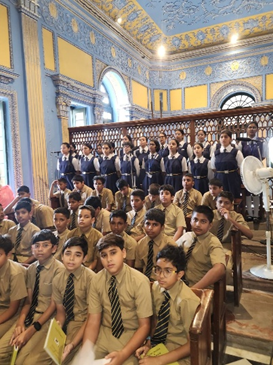
There was no doubt regarding the charitable purpose for the establishment of the College. The restriction of numbers that eventually settled at 100 was the result of local administrative convenience, a suitable number when the total strength of the College was predicted to be about 250. As the total strength began to increase, it was not accompanied by a corresponding increase of boys supported by the Foundation. The number 100 seemed set in stone for many decades. Restrictions on an increase in the number of Foundation pupils was also the result of segregation based on race, availability of funds, political and social developments and a general apathy to bring about change. No questions were asked and there was no voice to persuade authorities on behalf of a section of society that was struggling to survive and was dependent on charity for any benefits that would come its way.
In the second decade of the 21st century, following a re-examination of the Will of the Founder and the Scheme of Administration, a conscious decision was taken (a) to increase the number of resident scholars to maintain the tone, traditions and economy of the Boarding House; (b) to invite applications for boys to receive the benefit of education from among the most deprived sections of society; (c) to promote the Anglo-Indian identity of the College by providing, to begin with, Foundation pupil status to boys from Anglo-Indian families around the country.
It was felt that these steps, while not affecting the number of pupils admitted as boarders and day-scholars, would infuse the College with the basic raw material to sustain the College as an institution answering to the description of a “linguistic minority” and working to promote the use of and protect the identity of English as the defined mother-tongue of the community. The overall effort did bear fruit as numbers indicate:
| Year | Day Scholars | Resident Scholars | Foundation Scholars | Resident S+Found. | Staff Children | Total Nos |
| 2010 | 3397 | 138 | 29 | 167 | – | 3503 |
| 2012 | 3740 | 123 | 24 | 147 | 99 | 4010 |
| 2014 | 3790 | 199 | 22 | 221 | 111 | 4145 |
| 2015 | 3794 | 267 | 28 | 295 | 122 | 4239 |
| 2016 | 3326 | 324 | 35 | 369 | 110 | 4277 |
| 2017 | 3274 | 320 | 58 | 378 | 152 | 4249 |
| 2018 | 3222 | 296 | 74 | 370 | 174 | 4206 |
| 2019 | 3459 | 342 | 98 | 440 | 143 | 3899 |
| 2022 | 2969 | 303 | 152 | 455 | 131 | 3555 |
| 2023 | 2307 | 100 | 163 | 263 | 158 | 3257 |
| 2024 | 2232 | 114 | 143 | 257 | 188 | 3177 |
- The number of full fee-paying Resident Scholars increased from 123 in 2012 to almost three times that number (342) in 2019. The target was to accommodate 700 boarders within 10 years. This was not achieved due to the Covid 19 pandemic, when there was a lock down for nearly two academic sessions, followed by the fear associated with infection due to community living.
- The total number of Resident Scholars (including full fee-paying Boarders and Foundationers) rose from 147 in 2012 to the maximum number ever on record (455) in 2022.
- The number of Foundation Scholars (largely Anglo-Indian boys) rose from 24 in 2012 to almost seven times that number (163) in 2023. The concept of demi-Foundationers was abolished as it had not been a part of the Founder’s Will or the Scheme of Administration.
- The number of Day Scholars was reduced due to a reduction of intake numbers in the class of entry, i.e. Nursery from 2016 onwards.
These measures would have significant ramifications upon the demographics of the College, paving the way self-funding for Foundation pupils, not dependent on Trustees’ grants-in-aid, a large ever-present student body resident on the campus. Numbers significant enough to introduce and promote activities, especially games and sports with no dearth of ever-present and ever-willing participants.
It was also time to take charity and demographics to a new level with the introduction of Permanent Resident Scholars who would add a new dimension to the flavour of the College and the philanthropic service expected of it.

 Macky's Mart
Leave a comment