

The New Foundationer –
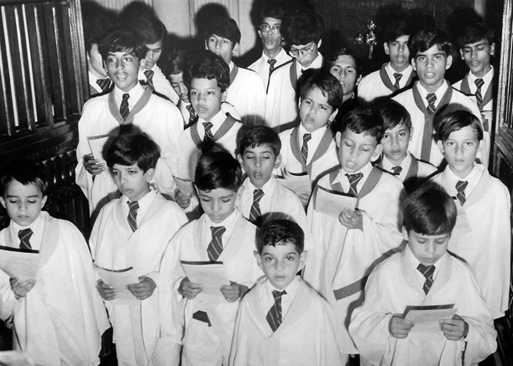
Claude Martin’s Boys

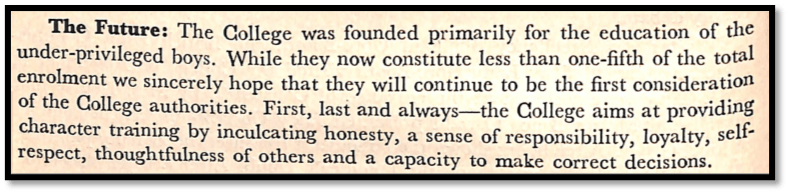
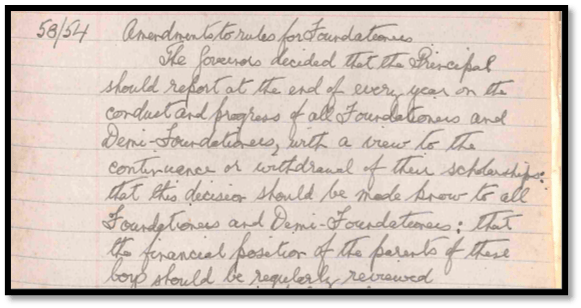
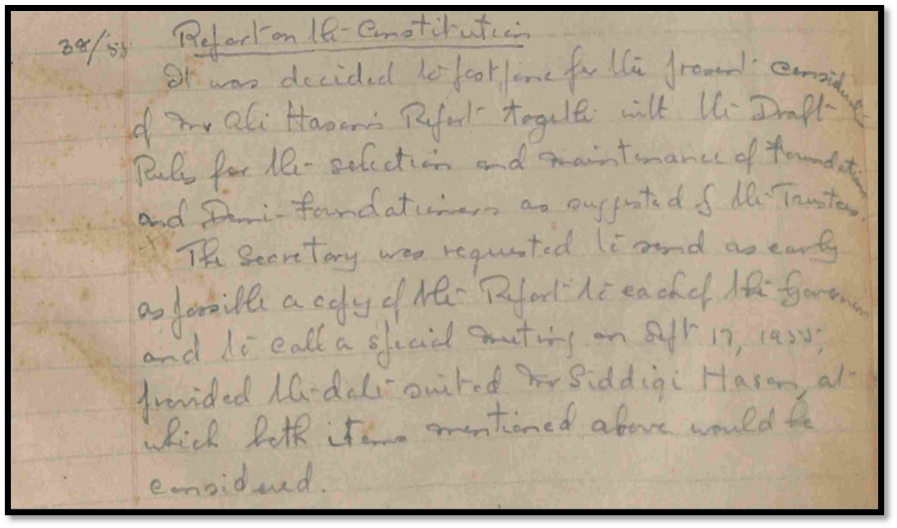
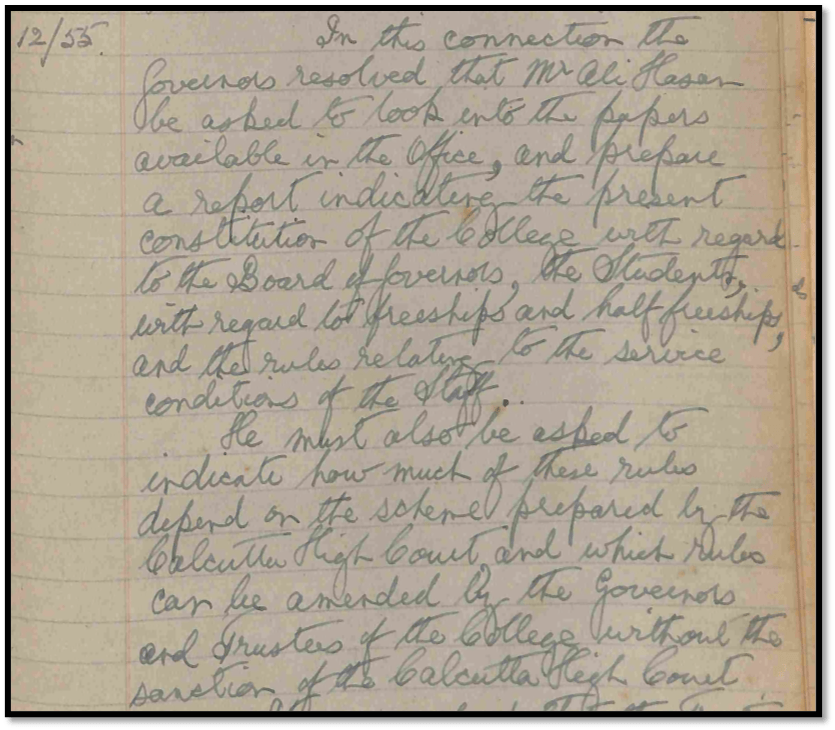
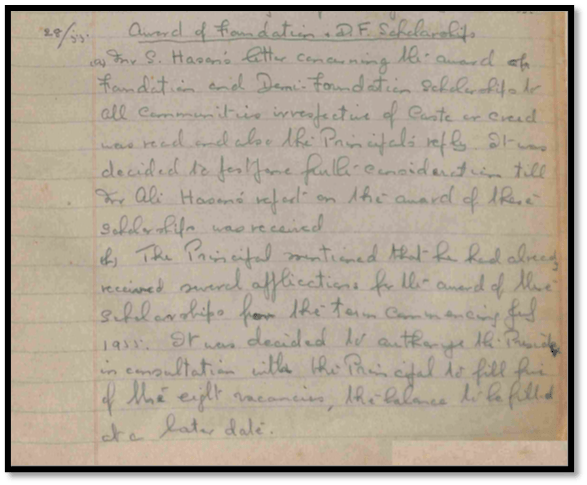
As the College moved towards 175 years of its establishment, the philanthropic component of the Founder’s Will was re-examined in accordance with the exigencies of contemporary times. Through nearly two centuries, Trustees, Governors and Administrators have tweaked the tenets of the Will and the Scheme of Administration while still staying on the right side of the law. It is well known that legal rules can produce unjust outcomes. La Martiniere College, Lucknow has been burdened with this reality.
Perhaps ironically, the phrase, “the law is an ass” was popularized by Charles Dickens in Oliver Twist, a novel based upon the appalling conditions of orphans and abandoned children in Victorian England. Published in 1838, two years before the Court Decree by which the College was founded, the idiom is often used to describe situations where following the letter of the law defies logic or fairness, often leading to ridiculous outcomes. The way Maj. Gen. Claude Martin’s bequest has been toyed with may be seen in this context. This is apparent in the way the charitable, gratuitous and philanthropic spirit of his Will has been circumscribed over the decades by the harness of the law. It is seen that the law is not always synonymous with justice or common sense. Decisions, especially those related to charity, seem morally wrong when they are blindly influenced by the literal text of a statute. A literal or inflexible application of the law has led to an absurd or unjust outcome.
This non-application of the spirit of altruism and generosity, while scrupulously following the letter of the law through convenient interpretation has done great disservice to the memory of the Founder and prospective beneficiaries of his largesse.
- The College was established as an institution that would be sustained on the investment made by the capital left by the Founder.
- The majority of boys, or some might interpret it as all pupils, were to taken care of by the Foundation.
- The College was established with the best of intentions, utilizing the best financial minds in British India and later, the Republic of India. This was to secure the capital of the institution and make safe, judicious investments.
- The Founder Will and the Scheme of Administration envisaged a school for boys, irrespective of race and religion.
- The letter of the law was applied by two departments being established – a European and Anglo-Indian section and an Oriental or Native section.
- Following the events of 1857, the native department was relocated and gradually ground to the dust.
- Provision was made for lodging, boarding and domestic arrangements for at least 25% of the total pupil strength. Residence in the College was compulsory for Foundation pupils.
- Parents who could afford fees and desired to have their sons educated at the College were granted admission for their sons as resident scholars.
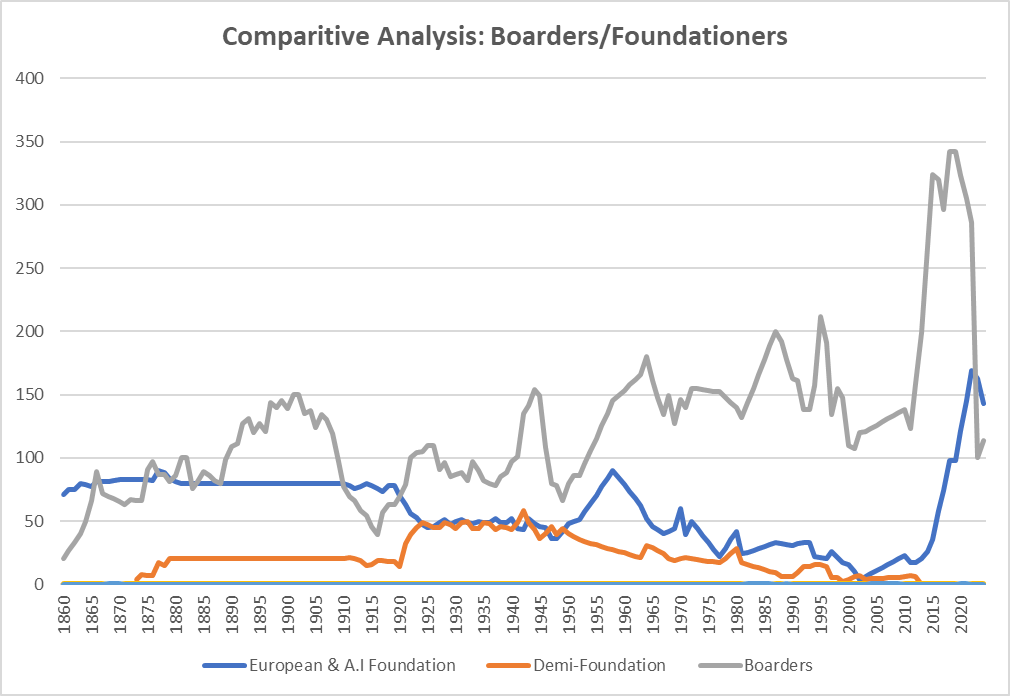
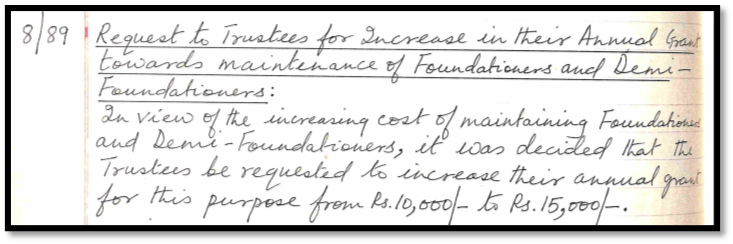
- The absolute number of Foundation pupils was never set. Governors from time to time set an arbitrary number. By practice this seemed to stabilize at 100.
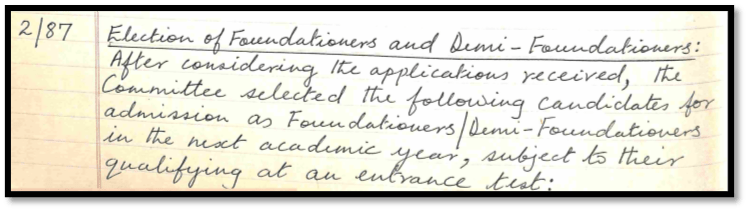
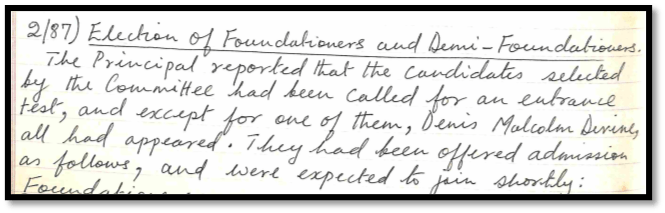
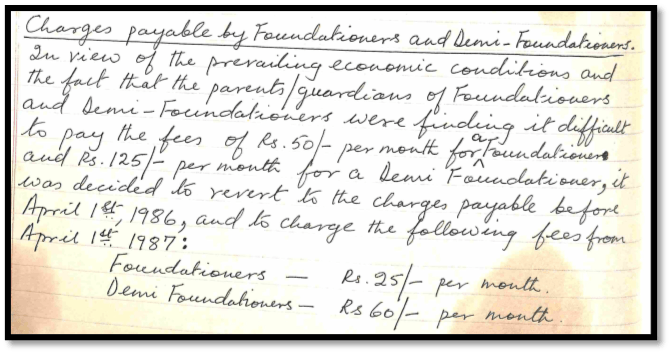
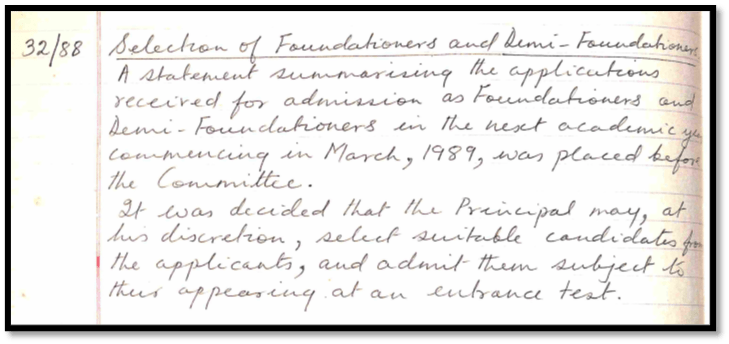
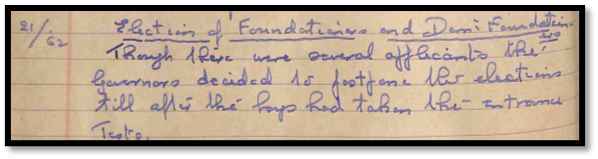
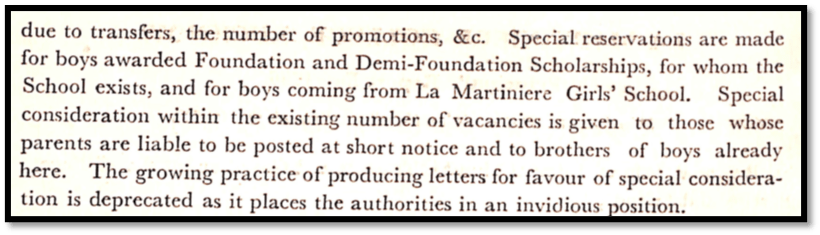
- Interpretations of the letter of the law began with the introduction of supernumerary Foundationers, from whose parents, concessional fees were received.
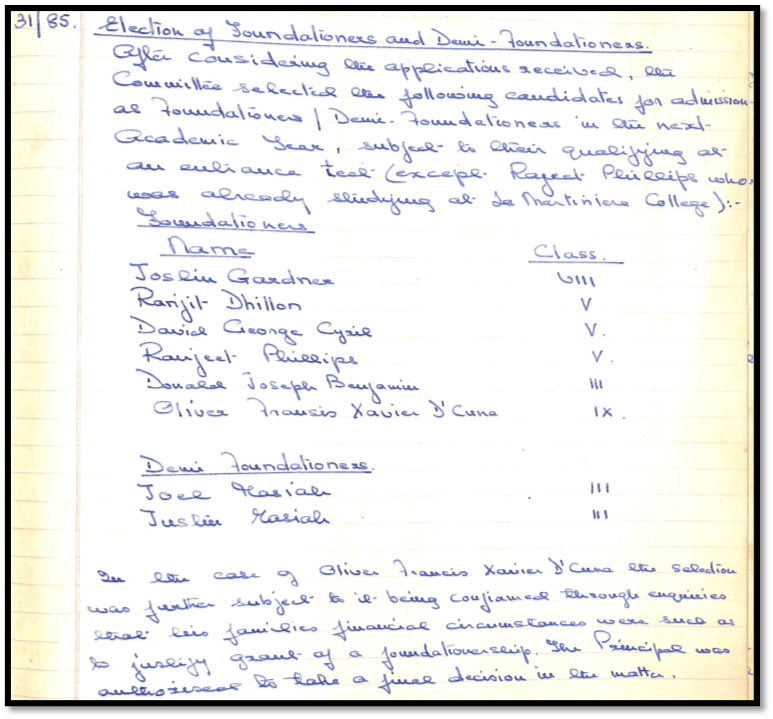
- The nomenclature for supernumerary resident-scholars was converted to demi-Foundationer.
- Resident Scholars, whose parents could pay for boarding and lodging facilities became to first Boarders.
- Day-scholar pupils were reluctantly permitted to seek admission on the payment of appropriate fees.
- The College was seen as primarily a residential institution.
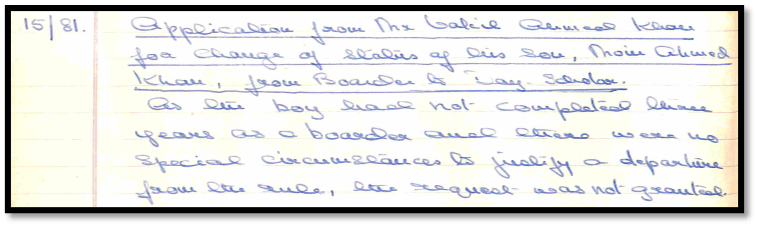
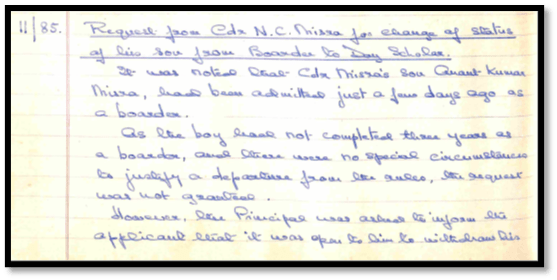
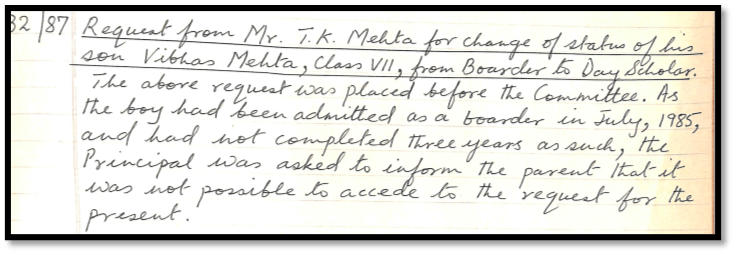
- Segregation by race was the norm. After much struggle, Indian pupils were admitted, but only as day-scholars.
- With the withdrawal of the British and Anglo-Indians from India following Independence, it was expedient to admit Indian boys as day scholars. Later Indian boys shared facilities for boarding and lodging when admitted as resident scholars.
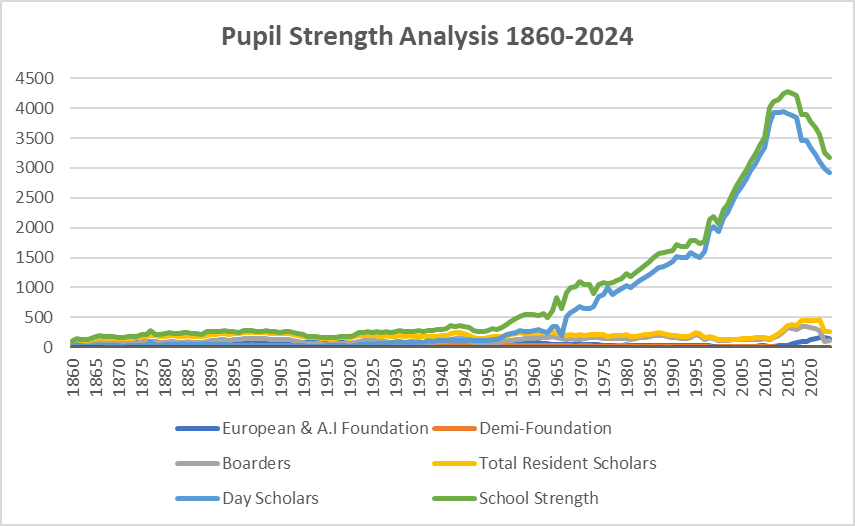
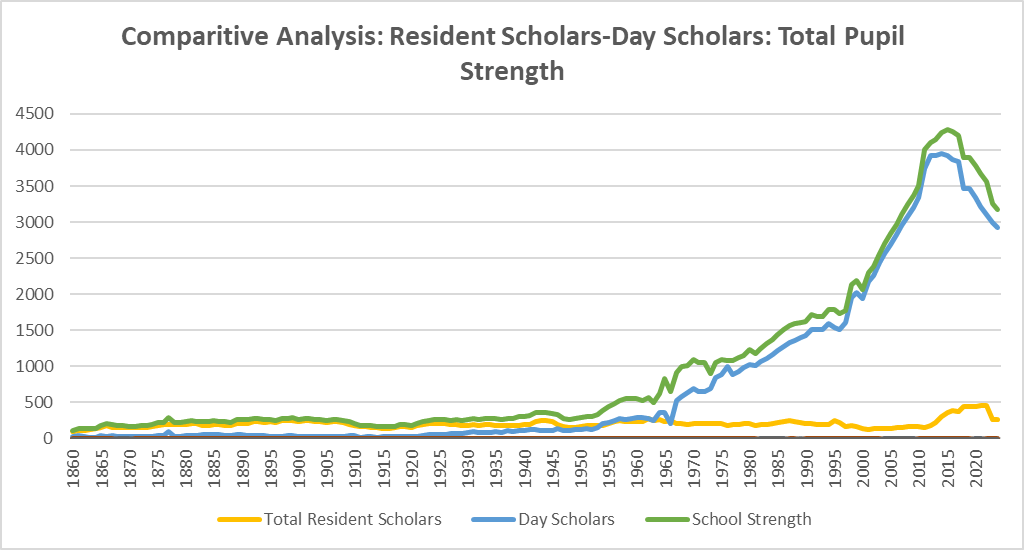
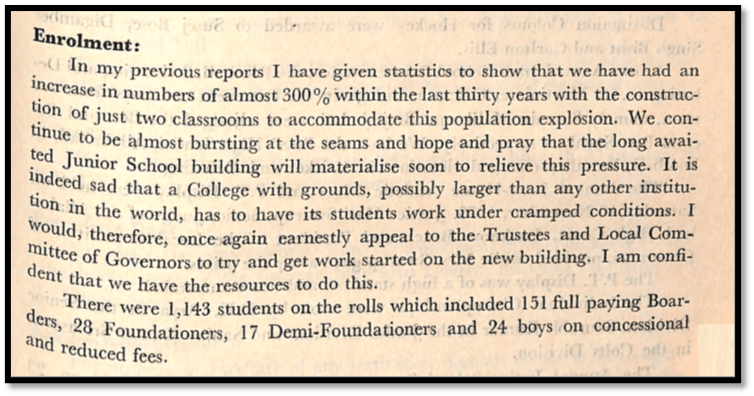
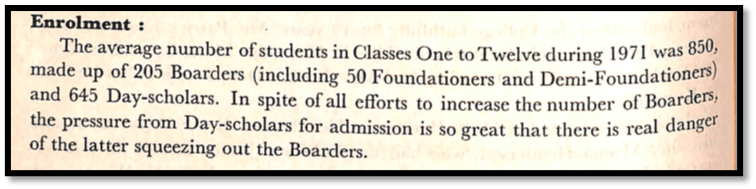
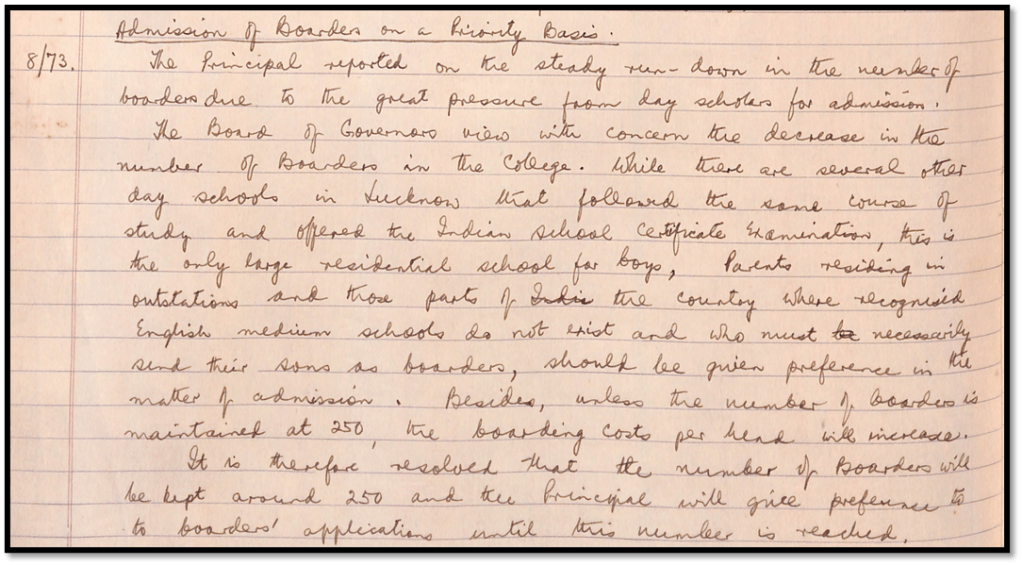
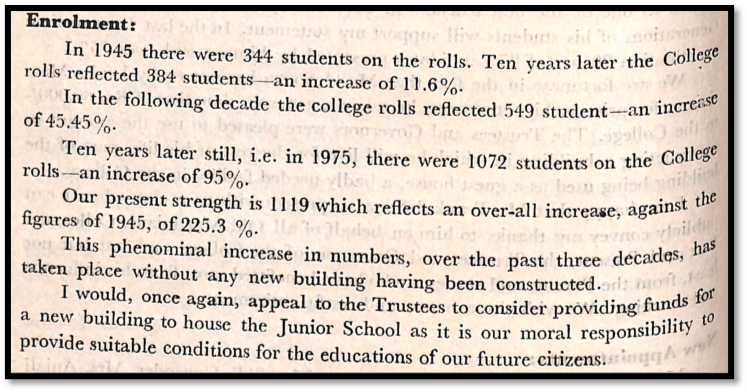
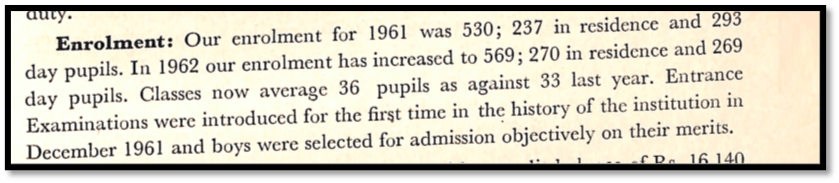
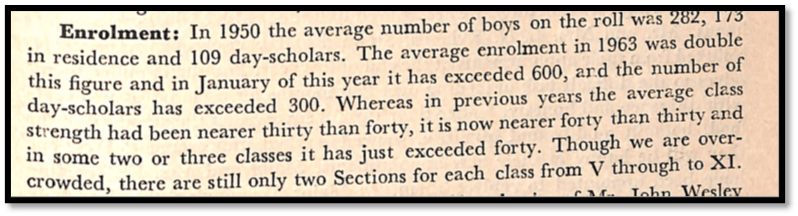
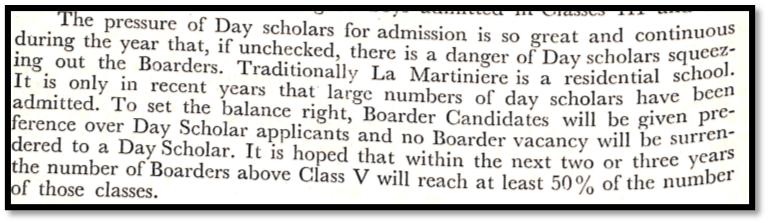
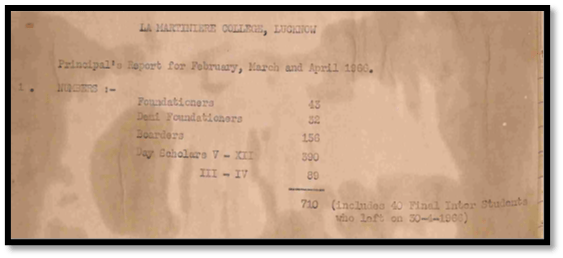
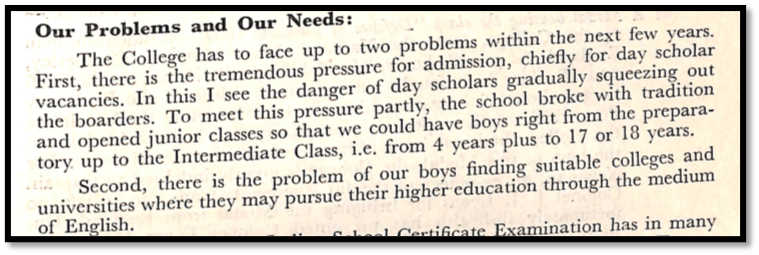
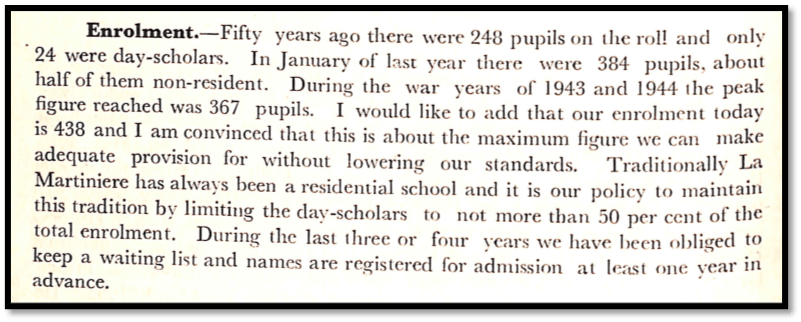
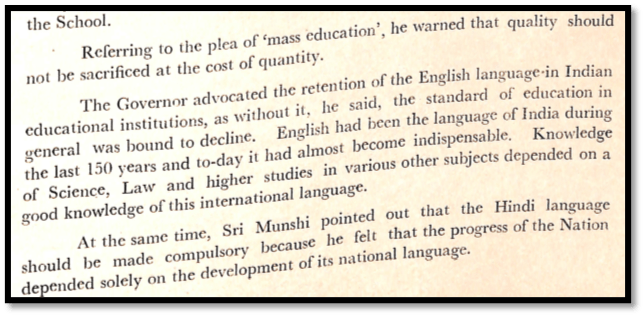
- To keep the economy afloat, day scholar pupils were admitted in large numbers. India was moving towards the goal of mass education.
- The Foundation pupils were relegated to the lowest priority: numbers were retained to fulfil the letter of the law.
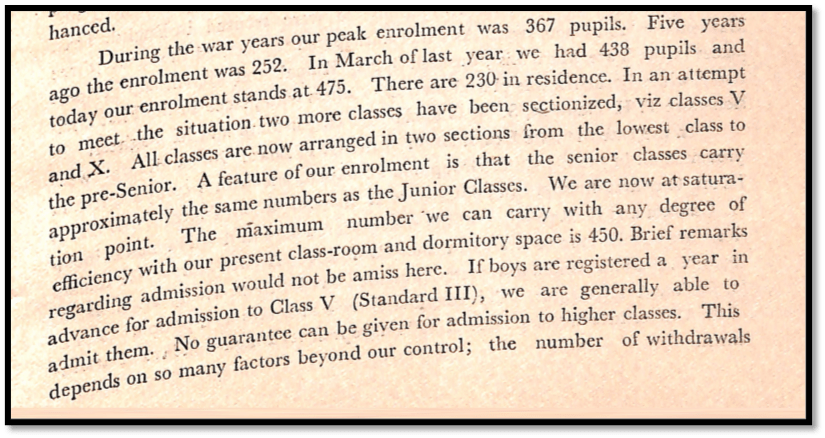
- Skewered fee policy and self-imposed restrictions, not envisaged by the Founder, required that numbers admitted had to be multiplied to make ends meet. This could only be done by admitting day scholars whose numbers soon overtook the resident scholars. This rapidly changed the tone of the institution.
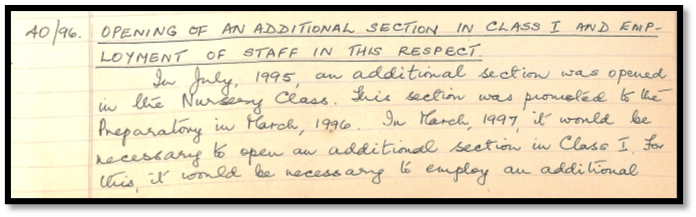
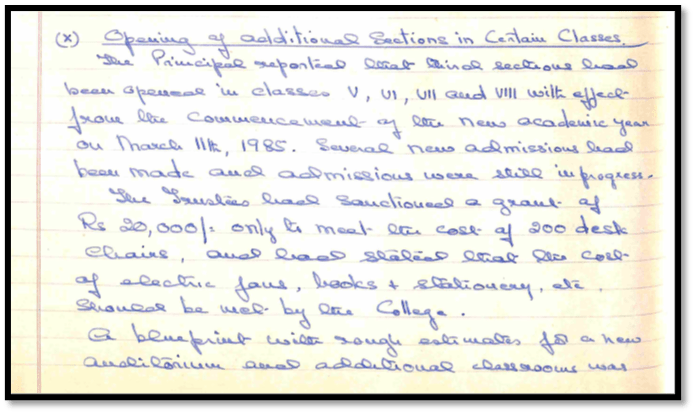
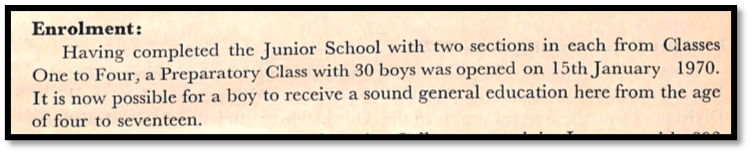
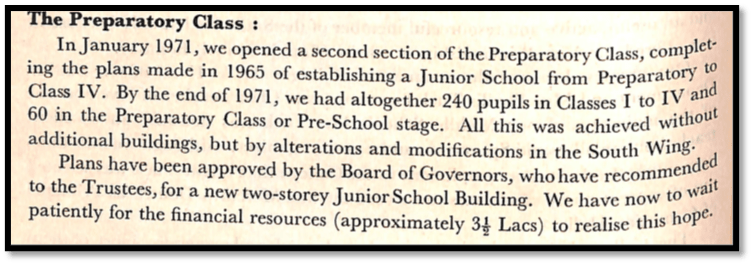
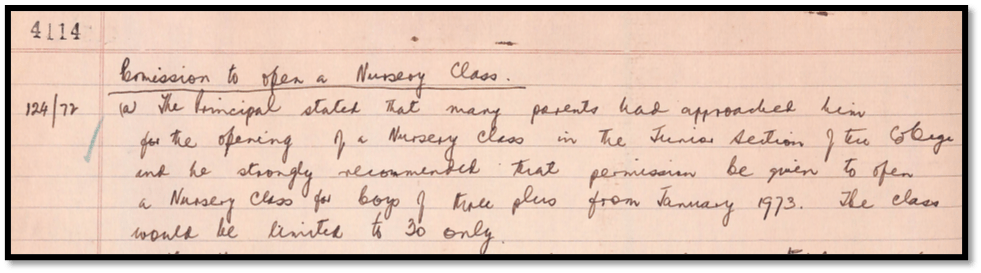
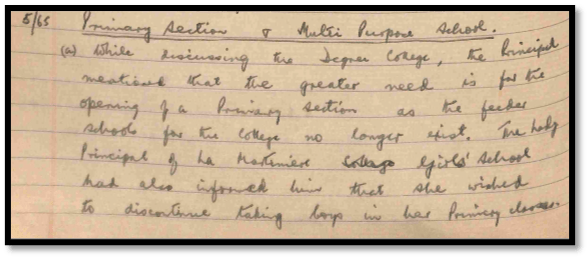
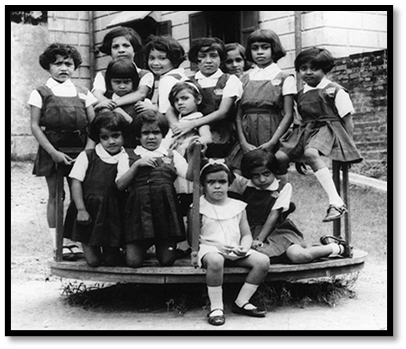
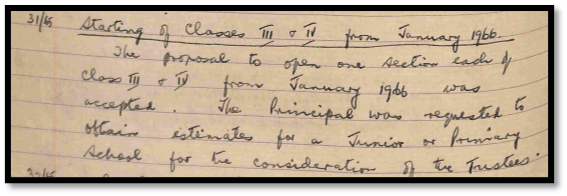
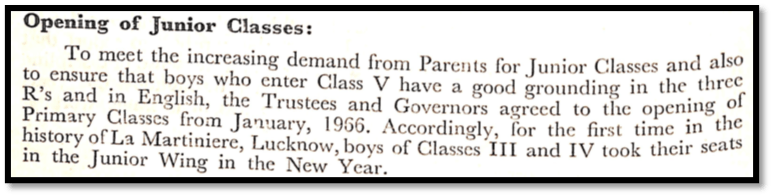
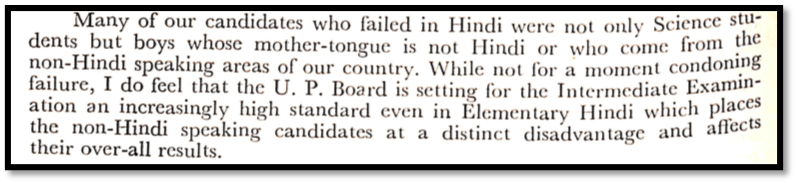
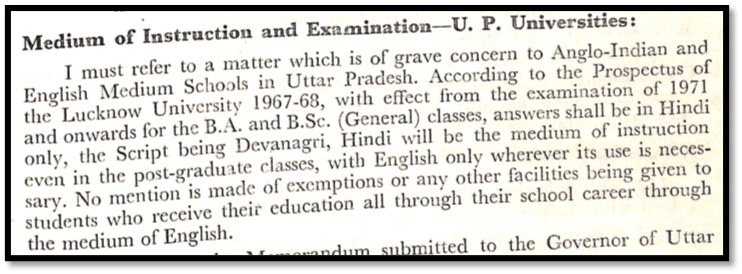
- Junior classes were sanctioned. Multiple sections were sanctioned. Pre-school groups were introduced. Class strength burgeoned. The western character was replaced largely by non-westernised staff and Hindi speaking pupils.
The Spirit vs the Letter of the Law
The legal foundation for the continuance of the system of Foundation pupils is the Will of Major General Claude Martin. The College exists because a court decree ordered that his charitable intentions be carried out, after prolonged litigation that culminated in binding judicial schemes in 1839 and 1841. The College is therefore not merely a school, but a charitable trust created by testamentary direction. Claude Martin expressly set aside a substantial portion of his estate for education. His belief was that access to education should be made easier for the young, particularly those without means.
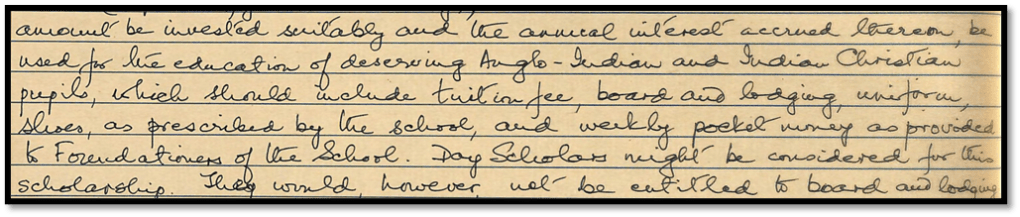
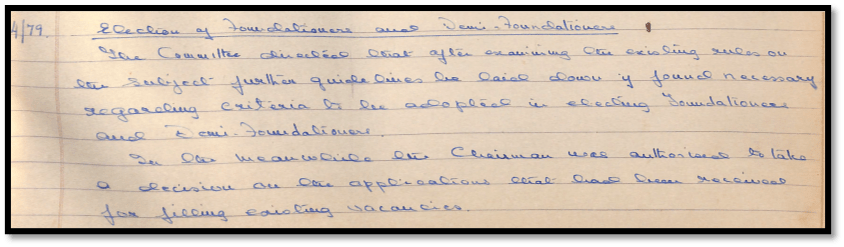
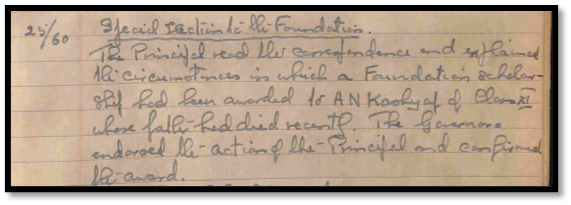
Under the scheme created to implement the Will, “Foundationers” are students supported from the Founder’s endowment. They are provided tuition, boarding, lodging, clothing and education at free of cost. This support exists because of the Founder’s charitable bequest, not as a discretionary welfare measure.
With the changes that have occurred that could not be envisaged by the Founder, the spirit of the law must take precedence over the formality of the letter of the law. This means giving effect to the underlying intention of the law giver rather than relying only on narrow technical wording. As applied to La Martiniere College, Lucknow, Maj. Gen. Claude Martin’s intentions were to make education accessible by a division of his estate. He intended the institutions to operate without discrimination of religion or background. He viewed education as a charitable obligation to society, not a commercial service.
In this context, the spirit of the Will requires that Foundationer benefits be preserved as a charitable right, not reduced to a concession. The College is expected to prioritise educational charity over revenue maximisation. Also, decisions affecting Foundationers are to be judged by whether they advance or dilute the Founder’s charitable purpose.This interpretation is reinforced by the fact that courts intervened to enforce the Will, meaning that charitable intent is legally paramount, not optional.
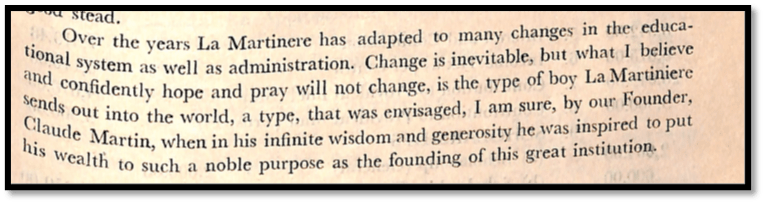
Charity at La Martiniere College is a continuing obligation, not a historical relic. It finds mention in the College song sung in all Martiniere institutions with the reference: “lasting still his charity” for which pupils are exhorted: “Faithful may we ever be, followers of his constancy”.
Legally and morally, this means that Charity is structural, not ceremonial; Foundationers are central to the Founder’s vision, not peripheral; any interpretation that treats Foundationers as a financial burden contradicts the object of the trust.
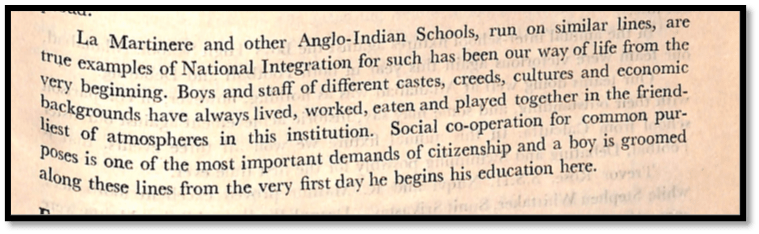
Equality does not negate charity. The College admits pupils of all background with equal opportunity. The Will and subsequent Scheme emphasise that all scholars share equally in the benefits of the College without preference in respect of religion or economic status. Foundationers are not “lesser” students; they are direct beneficiaries of the trust. The charitable character lies in lifting disadvantage, not erasing it by uniform fees or treatment.
Seen in the modern context, the spirit of the law governing the Foundationer system at La Martiniere College, Lucknow is this: The College exists to convert private wealth into public educational benefit, with Foundationers being the clearest and most direct expression of Claude Martin’s charitable intent.
The Foundationer System in the 21st Century
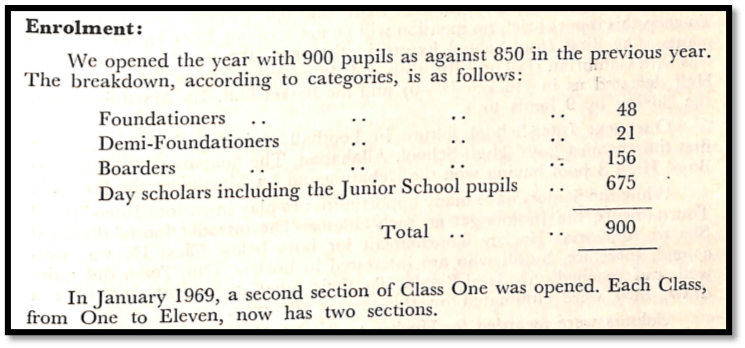
The commencement of the 21st century saw these multiple factors congregate to exhibit a College, offering 14 years of learning to boys, with abysmal regard to charity and first values. Consider the reported strength at the commencement of the new century:
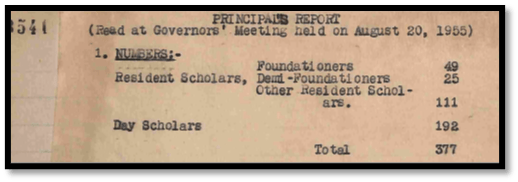
| Year | Total Strength | Day-Scholars | Boarders | Foundationers | Demi-Foundationers |
| 2001-2002 | 2298 | 2175 | 107 | 10 | 06 |
| 2002-2003 | 2386 | 2255 | 120 | 04 | 07 |
| 2003-2004 | 2569 | 2438 | 121 | 06 | 04 |
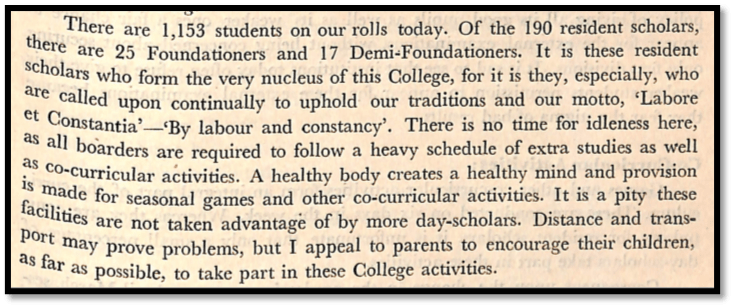
The numbers of Foundation pupils were nowhere near the arbitrary absolute number of 100, set more than a century ago. The number of paying Boarders could not inflate the expected number of resident scholars, nor establish any ratio or proportion in the context of day scholar strength.
From the time of Independence, now nearly 80 years ago, the reasons for ignoring or consigning the Founder’s ‘lasting charity’ vis a vis the Foundation pupils, have been numerous and excusatory. The tendency, promoted over a century has been to find cogent arguments to maintain a bare minimum number in a quaint display of tradition that was gradually converting to folklore. Among the number of excuses presented were:
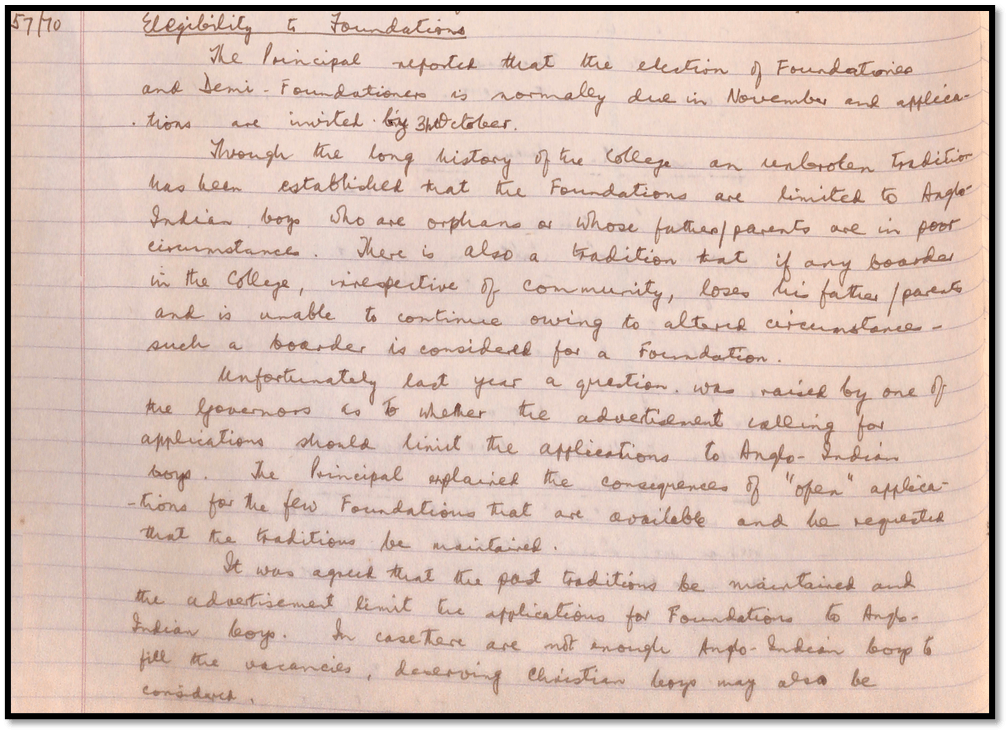
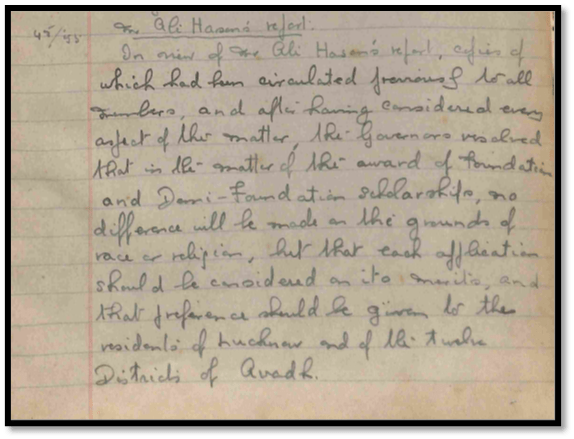
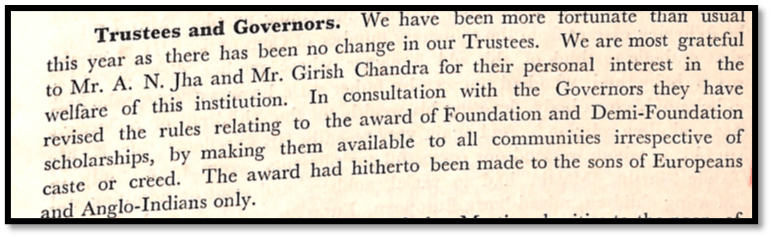
- The Founder’s Will and Scheme of Administration required Foundationers to be of European origin or Anglo-Indian ancestry.
The Founder’s Will, supported by the Scheme of Administration, placed no restriction on race.
- In modern India, the Anglo-Indian community has dwindled in numbers and not many Anglo-Indians candidates apply for the privilege of the Foundation.
The dwindling numbers, created by the European and Anglo-Indian diaspora, has been built up again by Anglo-Indians continuing to make the multi-community India their home. The number of boys who can be admitted must come from pan-India. The opportunity for a quality education must be offered to and enjoyed by them.
- Foundationers are freeloaders.
The provisions for free education were provided by the Founder and supported by the Scheme of Administration. Individual, subjective opinion should not interfere with the foundational principles of charity as espoused by the Founder.
- Foundationers are ungrateful.
Gratitude is not a condition for charity. The distinction between the ‘deserving poor’ and the ‘undeserving poor’ has no place in dispensing charity. Also, ‘gratitude’ – genuine or otherwise, is not a condition for service and charity even in the modern socialist state.
- Foundationers are tardy in their academic work. They don’t apply themselves to academic challenges. They get everything too easily. They do not respect the value of the privileges they enjoy … and so on, with grumbling in the same vein.
The Founder set aside his bequest for precisely such unfortunate boys. Many come from backgrounds that are severely financially limited. Most are admitted as children or pre-adolescent boys; affection rather than power and authority can provide a sterling change in attitude. The general malaise, inertia, torpor, apathy, indolence, languor and laissez-faire attitude is often an inherited social factor. It is the responsibility of care-providers in the College to encourage individual change. The state of discouragement into which children are born can be transfigured through accessible education.
- Foundation pupils are only fit for the sports field and not for the classroom.
The genuine credit for physical fitness and all the virtues with which sports and games are associated contribute an equal, if not a greater effect on the all-round education of a child. The best features of popular sport, unarguably promote those characteristics that education encourages. For the academically disinclined pupil, it is a meaningful educational tool rather than mere recreation. Perseverance, consistent effort, and self‑regulation are qualities that reinforce the value of sustained labour and determination in academic and professional pursuits. These cannot be imbibed by academic pursuits alone.
- Funding for the Foundationers is an unnecessary burden.
Foundationer benefits are a charitable right and not a concession. Educational charity is to be prioritised over revenue maximisation. Decisions regarding Foundationers are to be judged by whether they advance or dilute the Founder’s charitable purpose.Charity at La Martiniere College is a continuing obligation, not a historical relic. Any interpretation that treats Foundationers as a financial burden contradicts the object of the trust.
Permanent Resident Scholars

We are reminded of the apocryphal story that led to Maj. Gen. Claude Martin leaving the majority of his vast estate for the education of ‘young men and boys’. It is the story of Zulpheekar, an abandoned Georgian boy for whom the Founder paid a certain sum of money to his father. The condition of European children left destitute in a foreign land by death, desertion, abandonment and so on it may be said inspired Claude Martin to establish an institution where the ‘bazaar trash’ would have an opportunity to escape from destitution by means of a sponsored education. Zulpheekar, given the Name ‘James’ and the ‘patronym ‘Martin’ was educated in Calcutta. The scheme that Claude Martin suggested for his school for boys in Lucknow followed the trajectory of James (Zulpheekar) Martin’s own education and development.
More than 200 years later, in 2014, Mrs Kamini Rattan Chauhan, Secretary, Women Welfare and Child Development initiated a project in which she proposed that abandoned children who were being taken care of in child shelters and homes could be integrated with the wider society and enjoy benefits denied to them by the circumstances of their birth. She approached La Martiniere College, Lucknow to enquire whether the College would be able to accommodate, under this scheme, certain boys in the Boarding House. This would be in the nature of an experiment, which she hoped would be popularised by other institutions, especially those with residential facilities.
The timing was opportune. The College had already decided that there was to a resurgence of Foundation pupils. Considering the Will of the Founder, its legal implications, the carte blanche authority to take in children irrespective of religion and caste and such socially divisive considerations, it was agreed in principle, that the ‘experiment’ would be implemented in La Martiniere College, Lucknow, with certain riders.
From Zulpheekar to Shubham


In 2015, La Martiniere College had opened its doors to the first such Permanent Resident Scholar. Shubham was received on 8 October, 2015. He follows in the footsteps of Zulpheekar, the first abandoned child to be formally maintained by the generosity of the Founder, nearly 200 years ago. The Governors examined the action and recorded Resolutions in this regard:
ADMISSION OF SHUBHAM TO LA MARTINERE COLLEGE
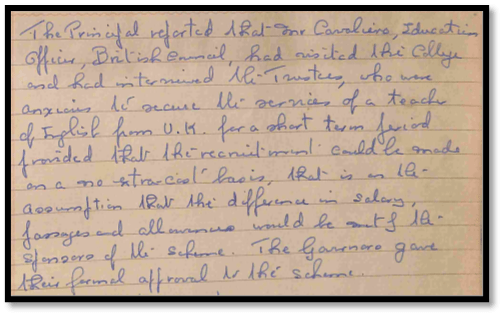
The Principal informed the Committee that in October, 2015, the Child Welfare Department had approached the College to consider integrating abandoned children in the mainstream system of education. This was to be conducted on an experimental basis. After considerable discussion and determination of legal implications, a boy named Shubham had been admitted to the College as a Resident Scholar. Safeguards for the welfare of the boy include the District Magistrate being appointed as his guardian by the Court of the 1st Class Judicial Magistrate, Bal Kalyan Samiti, Lucknow. He shall receive education in the College in the nature of a Foundationer. He shall be in the care of the College till he is 18 years of age. The Principal reported that despite the trauma that he has grown up with, the child was adjusting socially and academically. It would be further explored whether children in similar circumstances may be accommodated in keeping with the spirit of the Will of the Founder. The financial implications in this regard were also to be examined. With the Right to Education becoming a greater reality, it would be a significant contribution if abandoned boys could be taken care of with the safeguards required such as may be learnt from this pioneering case.
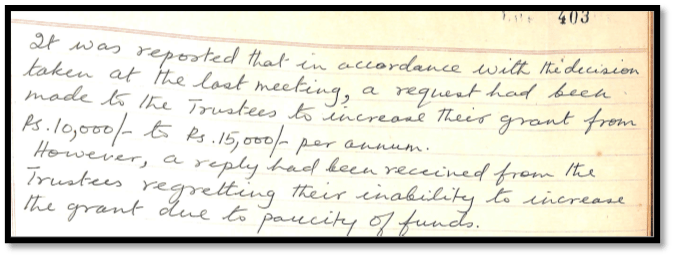
The LCG decided that keeping in mind the financial implications involved, the issue was to be discussed at the proposed joint meeting of the Trustees and the LCG.
With the approval of the Board of Governors the College subsequently, over the years received nearly 20 boys. The boys have over the years made the College their home with the security and emotional support from Staff and fellow students alike. Despite their academic delay and the social challenges they have faced, they have integrated with the wider student community and perform well in all spheres of College activity.
Boys were placed in foster care with the College accompanied by a judicial order in each case by the Child Welfare Magistrate. The District Magistrate of Lucknow, by means of the same order, is ex-officio local guardian of the children. The boys, as per agreement, are to be educated at La Martiniere College, with full facilities including boarding, lodging, clothing, health, recreation, etc. The boys are to follow the academic scheme of the College until they completed the ISC or equivalent examination.
The legal framework for this sensitive project was drawn up with the following safeguards:
- The boy/boys recommended to the College would be placed in legal foster-care with the College.
- The children would be received by the College with the Child Welfare Magistrate’s written order for each boy.
- The College would include the boys under the provision for Foundation Scholars in the Will of the Founder Major, Gen. Claude Martin.
- The District Magistrate who is also a member of the local Committee of Governors of the College, in an ex-officio capacity, would serve as the Local Guardian of each boy.
- The boys/boys would be medically examined and the College Physician’s report attached.
- The case history of each child would be presented to the College and maintained.
- The CWC officials had the responsibility of making regular visits to check on the children’s welfare.
- The children would be educated at La Martiniere College, with full facilities including boarding, lodging, clothing, health, recreation, enhancement of their particular talents.
- The boys would follow the academic scheme of the College until they completed the ISC or equivalent examination.
The scheme is now a well-established part of the College programme, providing inclusivity of less-advantaged children with boys from relatively privileged backgrounds. Above all, it is a natural progression in fulfilling the spirit of charity enshrined in the Will of the Founder. For the first time in the history of the College, a clear legal format has been provided for a new category of Foundation pupils. It is predicted that such children born into disadvantage, shall be the new Foundationers in the unlikely event of the source of the Foundationers from the Anglo-Indian community for any reason ever dries up. The ‘lasting charity’ of the Founder shall thus be sustained.
The demographic change introduced has been well receive with alumni of privilege, mostly requesting anonymity, have made generous contributions for the welfare of the children, including clothes, sports goods, pocket-money, excursions, gifts etc, creating a bonding with the children.
In addition, the College has provided legal protection to the children, as required, visits to parents separated by jail sentences, mental problems, visits to girl siblings and even reuniting with family after years of separation due to being lost in crowds.
By 2018, the Governors were apprised of four more boys joining this category of scholars, whose number reached 10 by 2019 and continued to increase with a minimum of two boys being added to the community each year.
Conclusion
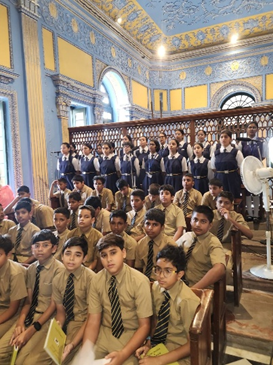
From a small colonial era institution dominated by European and Anglo Indian boys, La Martiniere College, Lucknow, has evolved into a predominantly Indian, socially diverse, and nationally respected school. The most significant demographic change has been the broadening of access, especially for Indian middle class families, while the most significant continuity has been the Foundationer system, which preserves economic diversity. The demographic evolution of La Martiniere mirrors India’s own historical journey—from colonial hierarchy to inclusive nationhood, while remaining anchored to the philanthropic vision of its founder.
A single act of philanthropy can sustain generations. Claude Martin’s decision was remarkable for his times. The current mixed demography prevents the college from becoming socially homogeneous or insulated. A school composed exclusively of affluent students, risks narrowing perspectives and fostering social detachment. With fee contributing pupils and Foundationers sharing the same facilities together, the College actively dismantles social hierarchies within its campus. The student body reflects a broader cross‑section of society, enriching classroom discussions, friendships, and shared experiences. Especially significant is the Foundationer system. This is not an auxiliary welfare measure; it is foundational to the college’s existence. To discontinue or dilute this system would be to redefine La Martiniere as a purely fee‑driven institution, severing it from the very principles upon which it was established.
In an age marked by widening economic inequality, educational institutions such as La Martiniere College play a critical role in bridging social divides, and La Martiniere’s long‑standing model offers a proven example of inclusive excellence. It continues to be not only an institution of privilege but also one of purpose, contributing meaningfully to society while retaining a balanced and representative demographic structure.
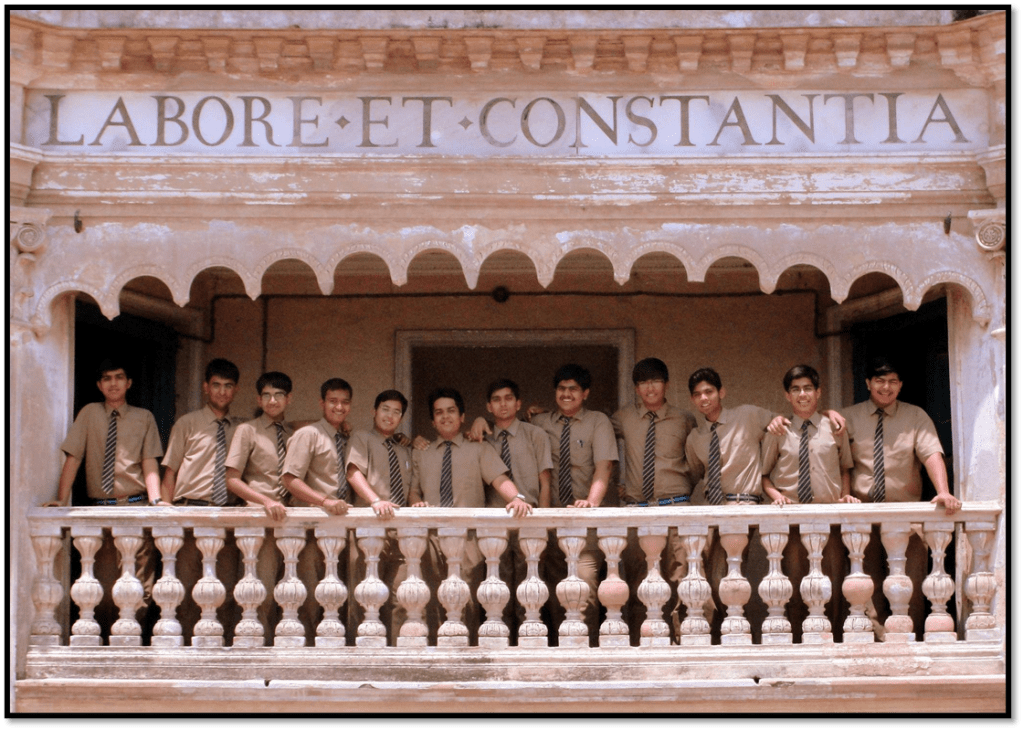
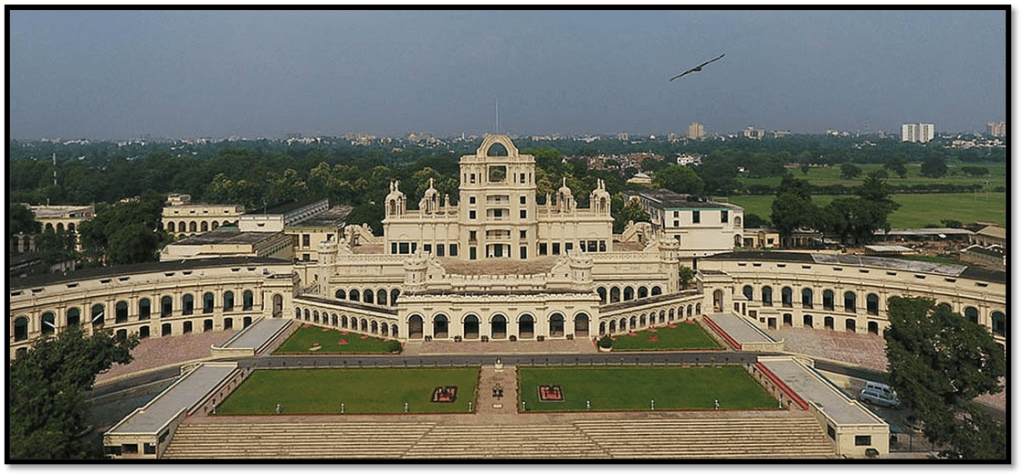
La Martiniere College, Lucknow, stands as a permanent monument to the spirit of charity of Claude Martin. It is a reminder that true charity lies not merely in giving, but in creating opportunities that transform lives. Claude Martin’s vision lives on, not in stone and mortar of Constantia alone, but in the lives shaped by the education he so generously endowed.























 Macky's Mart