
The Sixties
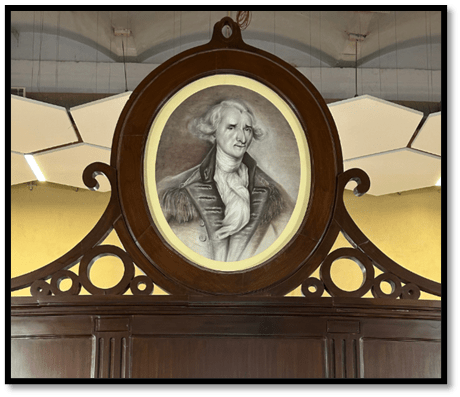
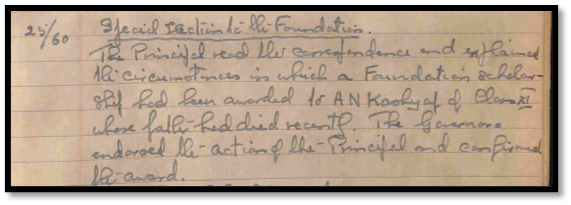
The decision of the Governors to open the Foundation to boys of all communities was put to the test and recorded in the Minutes in July, 1960. Sanction was provided for the special circumstances necessitating a Foundation ‘scholarship’ being awarded to A. N. Koshy, a pupil of Class 11, whose father had died recently. This example and other fatalities, when the breadwinner of the family passed away during a boy’s academic career in the College, led to the practice of offering freeship to such pupils. This was consequent to the domestic financial circumstances and the readiness of the family to receive such charity.
The demographics of the College continued to be affected by the contest between the colonial hangover and confidence in the systems indigenous to India. This was most apparent in the desire for improvement of standards of English language in the College. Independence had thrown open the door for admission of boys to all communities and social standing. Fees were not exceptionally high; finances being balanced by the number of admissions. There were no longer racial restrictions and the democratisation of education redefined choosing candidates from so called ‘good families’ as was a practice in the past. There is no doubt that there was a sudden drop in the standard of English in the College. A knee-jerk reaction was to propose that teachers of English, native to the United Kingdom, be employed to improve declining standards. This initiated a debate on whether independent India was able to pass muster in training of men and women to teach the English language, despite the evolving variety of ‘Indian English’.
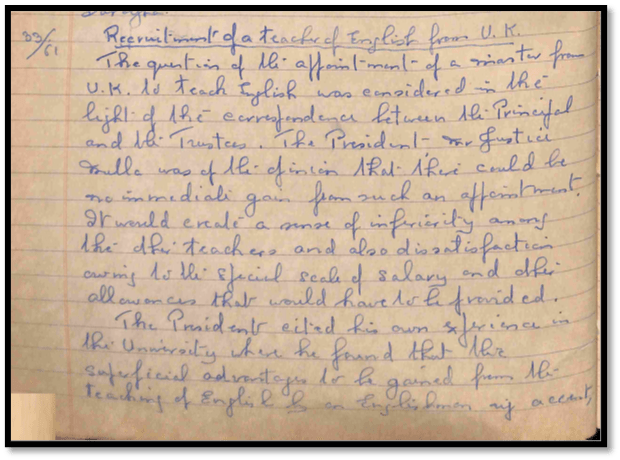
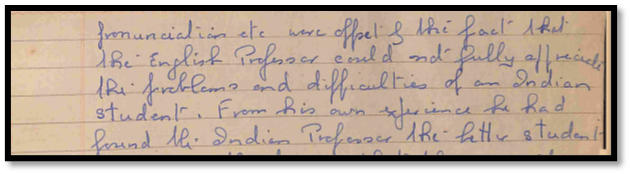
The matter was brought to the attention of the Governors on 29 July, 1961, when a discussion began on the viability of recruiting a teacher of English from the UK. Correspondence on the subject had already begun between the Trustees and the Principal. The Chairman of the Committee of Governors Mr (Justice) A. N. Mulla was firm that could be no immediate gain from such an appointment/ He further cautioned that a teacher from abroad would expect a higher scale of salary and incidental expenses, thereby causing a sense of inferiority and dissatisfaction among the Indian faculty. In a forthright personal statement, Justice Mulla cited his own example while reading at the University, where only ‘superficial advantages’ could be gained from the teaching of English by an Englishman, viz accent and pronunciation. This was offset by the English Professor not being able to fully appreciate the problems and difficulties of an Indian student. The home-grown’ teacher was preferred. This real need was amply filled by the Anglo-Indian teacher, for whom English was a mother-tongue, with the added advantage of being able to fully understand the difficulties of first-generation learners of English who were learning English as a second language.

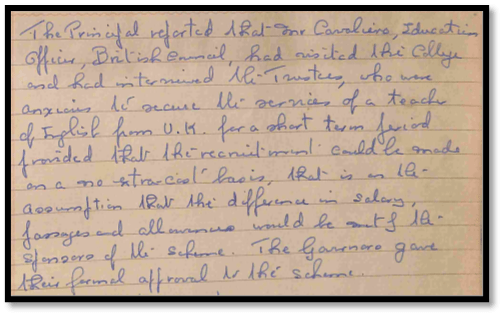
The question of quality English Language teaching went beyond its academic ramifications. The cultural presence of Britain in India following Independence had been assisted by the setting up, in 1948, of the British Council. Prime Minister Jawaharlal Nehru was initially ‘wary rather than enthusiastic’ about the Council’s establishment, but it nonetheless proceeded post-independence, with a push towards encouraging the teaching of English by native speakers of English. In September, 1961, the call for a teacher of English from England again surfaced. Officials of the British Council visited the College and interviewed the Trustees, who seemed enthusiastic about the proposal. It was proposed that recruitment could be made for a limited period on a no-extra-cost basis. It was assumed that the difference in salary, passage money, and allowances would be met by the sponsors. Under these circumstances, the Governors gave formal approval for the scheme.
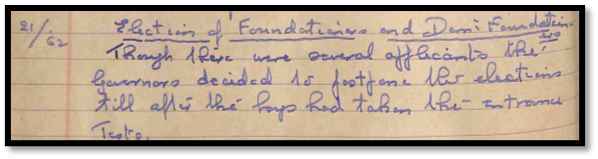
The 1960s strengthened the idea that Foundation pupils were to be chosen on academic merit, rather than on need. On 28 April, 1962, the election of Foundationers and demi-Foundationers was put on hold until the boys had qualified an Enterace test. It is not known whether this would have been a competitive test or merely to allocate classes according to academic ability. Nonetheless, it brought the role of charity to the forefront once again.
In a strange twist of irony, the Principal, unwittingly perhaps, referred to the difference between India and the United Kingdom using a reversal of the definition of ‘Home’. Referring to the Senior Cambridge examination, still conducted by the United Kingdom, the Principal stated that the examination “had been given recognition by all Universities at home and in U. K.” ‘Home’ was India. India was no longer the chief colonial outpost of the United Kingdom.

It was in 1962 that the strength of the Boarding House matched the number of day-scholars on roll.
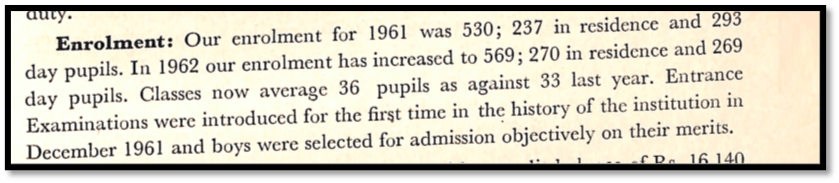
By 1963, the number of day-scholars, which previous dispensations had been so desperate to curtail, overtook the number of resident scholars. The Principal reported the increase in numbers and overcrowding in classrooms, in the Annual Report:
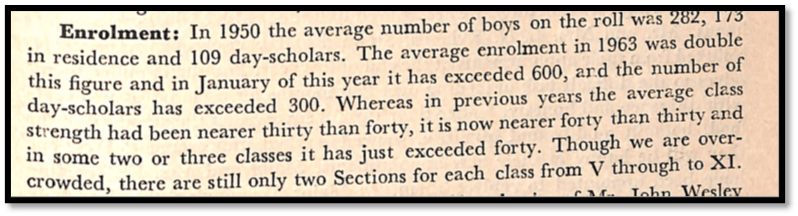
Looking back on his tenure in the College, Mr Meredith Doutre in 1963 recalled the previous decade when he been appointed as Principal.PR 1963.

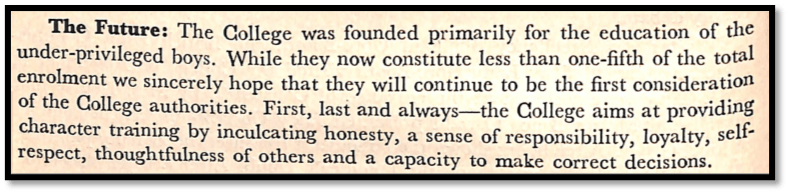
At the conclusion of his tenure as Principal of the College, Mr Meredith Doutre reminded guests at Prize Day, 1964 of the changes in demographics during his tenure itself. He hoped that the future would never forget that “the College was founded primarily for the education of the under-privileged boys” hoping “that they will continue to be the first consideration of College authorities”.
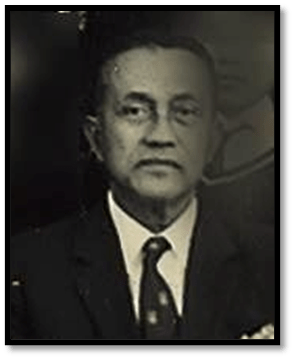
Mr Meredith Doutre was succeeded by Lt Col H.R.H. Daniells. The demographics of La Martiniere underwent a considerable change under his management. From the beginning of 1965, many plans for expansion were proposed. Rather than concentrate on a Degree College, it was his vision to introduce a Primary Section at La Martiniere. This would enhance the number of pupils and income, while ensuring that a full school level education could be obtained in a single institution. Moreover, the Principal of La Martiniere Girls’ College, the ‘feeder school’ for boys admitted Class 5 was planning to discontinue the admission of boys to that school, due to increasing pressure for the admission of girls in the lower classes. The Governors in February, 1965, permitted the proposal for a junior section.
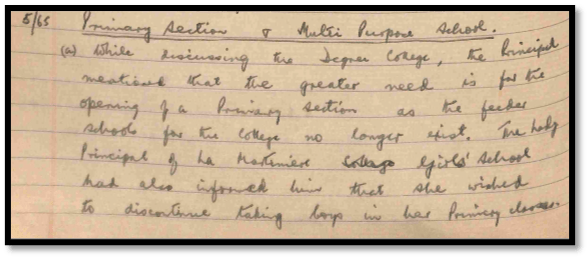
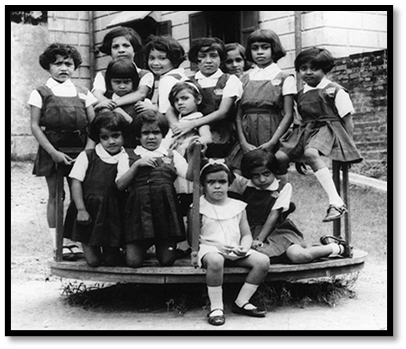
By 1 May, 1965, the decision to commence with Classes 3 and 4 in the Junior Section from January, 1966, was adopted by the Governors.
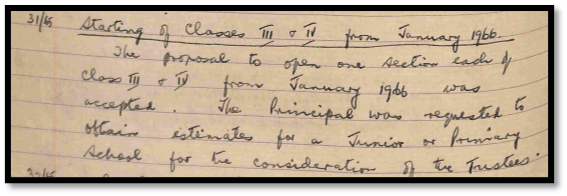
This was reported in the Annual Report of the Principal in 1966. Inevitably, enrolment numbers increased:
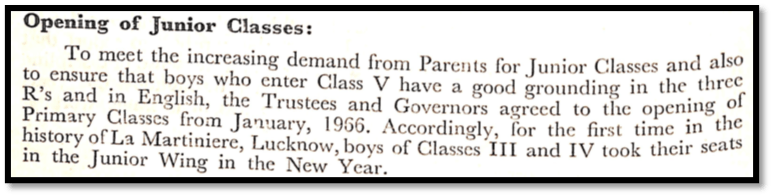
The College was not unaware of the challenges that this increase in numbers would have on the overall ethos of the College, still seen as primarily a Boarding school. Lt Col Daniells expressed his deep concern in this regard. Commitments were made:
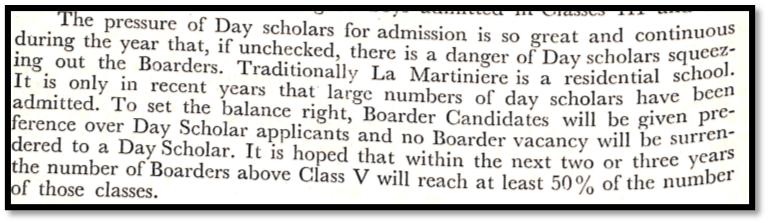
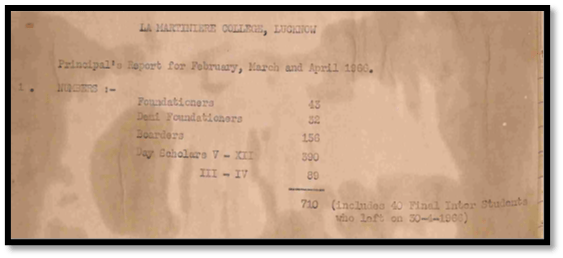
‘Vacancies’ for Resident Scholars was a fluid term; an unrestricted number being admitted as per demand. For many years the cap on Foundation pupils had been a total of 100, a figure set a century earlier, when the entire student body was approximately 200 pupils. Over the decades, Foundation pupils had been categorised into ‘Full’ and ‘Demi’ Foundationers. By 1966, despite protestations to the contrary, the total number of Foundation pupils had dwindled to 75. Contrast this with the number of Boarders (156), and a colossal number of Day-scholars (479). The figures are available in the Principal’s Report to the Governors on 10 May, 1966:
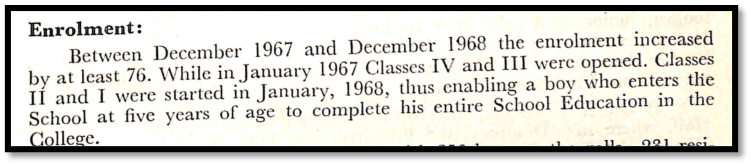
In January, 1967 classes 4 and 3 were opened, while classes 2 and 1 commenced exactly an year later in 1968. The Principal recorded that such a move ‘enabled a boy who enters the School at five years of age to complete his entire School Education in the College.’
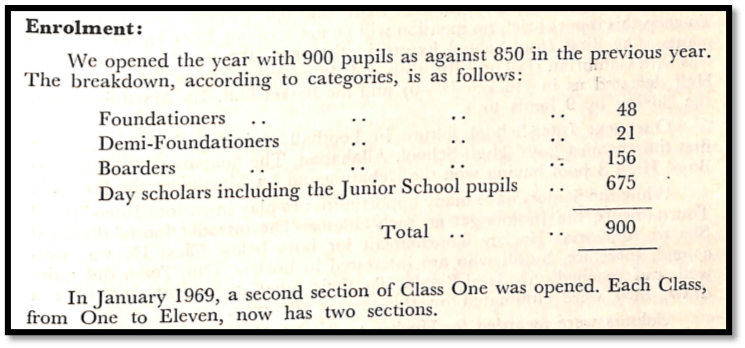
At the end of the sixties, numbers continued to boom, while the number of Foundation pupils continued to decline. In 1969 it was reported that the total number of Foundationers was 69, while the total pupil strength was 900. 1969 also achieved two sections in each class from Class 1 to Class 11.
Admission of Foundation pupils was no longer a priority; it being curtly recorded that election to the Foundation from 1970 would be “as and when vacancies are available.” Yet, the ‘quota’ to be filled was significantly not mentioned.

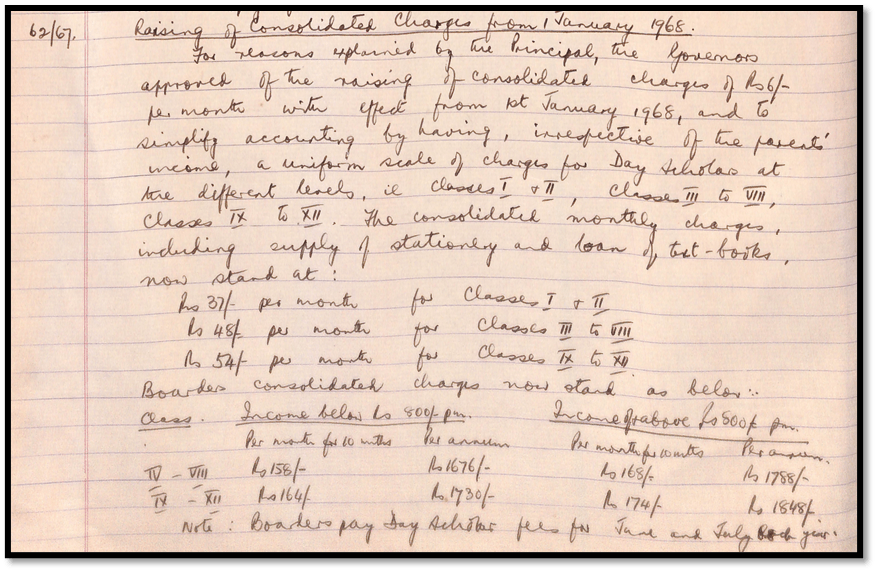
A unique feature related to the payment of fees for education at La Martiniere College, Lucknow had been the ‘sliding-scale’ for the fee structure, based on parental income. A major change in this policy, which would also affect the demographics of the College was made by the Governors on 15 December, 1967, where it was decided that uniform fees for all boys, irrespective of parental income would be charged. 15 days later, from 1 January, 1968. This would apply to all day-scholars. The fees were to be charged according to respective classes under the term ‘consolidated charges’ which also included supply of stationery and loan of text-books.
Fees for resident scholars were enhanced, concession was made by not applying boarding charges for a total of two months, coving the annual vacations. This relaxation in fees would be applied annually in June and July.
The ‘Indianization’ of education at La Martiniere College, Lucknow was plagued by repeated attempts by authorities to change not just the demographic structure, but to alter the medium of education, which was resisted from time to time. Following the compulsory introduction of Hindi immediately after Independence, from time to time ‘suggestions’ for a Hindi medium stream were made by various officers.
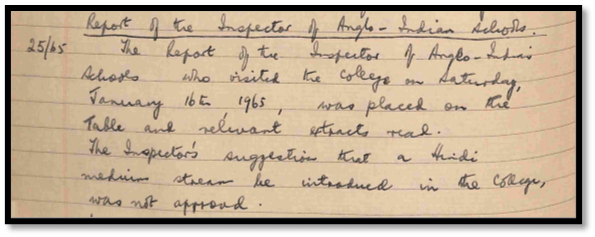
In January, 1965, the Inspector of the niche category of Anglo-Indian schools presented a Report that was placed before the Governors on 1 May, 1965. This included a ‘suggestion’ that “a Hindi medium stream be introduced in the College”. This was rejected by the Governors. Such statements nonetheless served as reminders of the full-fledged ‘native’ school that had existed, in accordance with the Will of the Founder and the Scheme of Administration that had been set down by the Calcutta Court. La Martiniere College was by now a very Anglo-Indian school, where the definition of Anglo-Indian was still evolving to include education in the mother-tongue of the Anglo-Indians, i.e. English; opportunities for non-Anglo-Indian pupils to partake of this education; curricula that included the best from western secular education and the culture of the sub-continent.
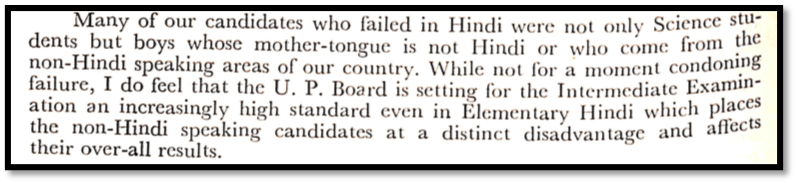
The dilemma of achieving skills in Hindi, the mother-tongue for most pupils at the College since 1947, with education in an Anglo-Indian school whose raison d’etre was the promotion and preservation of the English language had to be faced from time to time. Candidates for the Intermediate Examination conducted by the State-run Board of Education were required to clear the examination for Hindi. While a number of candidates received distinctions, especially in Science, the Principal rued that among those boys who failed to clear the overall examination were Science students, many of whom did not use Hindi as a mother tongue or came from non-Hindi speaking areas of the country. He regretted that “an increasingly high standard even in Elementary Hindi (placed) the non-Hini speaking candidates at a distinct disadvantage and affects their over-all results.”
The same concern was echoed by the growing threat of conducting higher education at Lucknow University in the Hindi medium. Attention was drawn to the prospectus of Lucknow University for the session 1967-68 that all instruction and examinations from the session 1971 would be in Hindi only, with Devanagri script in use. The demographics for the College and all English-medium schools was certain to be affected.
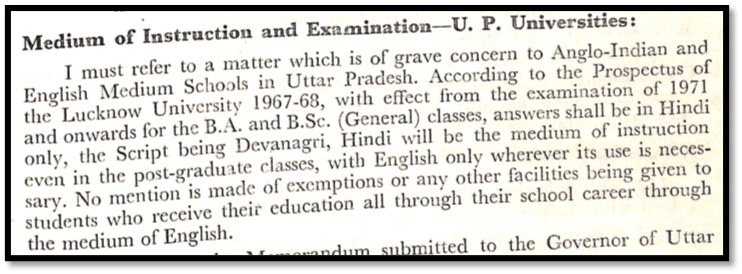
Reference was made to a Memorandum submitted to the Chancellor/Governor of State Universities, by Mr Frank Anthony, the nominated Member of Parliament representing the Anglo-Indian community, on behalf of La Martiniere and other Anglo-Indian schools. The Chancellor/Governor was advised that “If this policy is enforced, it will be a particular hardship to minorities that have languages other than Hindi as their mother-tongue. Further this policy will make it impossible for parents, who are residing in U.P. but are from other States to educate their children in U. P. Universities.” The trickle-down effect would seriously affect the demographics of English-medium schools.
At the end of the decade of the sixties, Principal Daniells recorded in his Report on Prize Day 1970 that he foresaw difficulties in pressure of admissions and issues of language as the challenges for the immediate future:
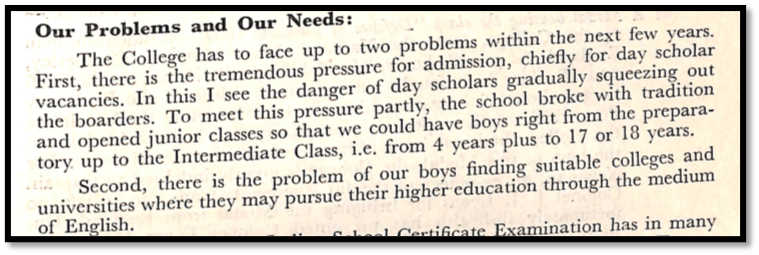
The sixties presented the contest of a balancing act between retaining the Anglo-Indian identity of the College and including popular trends related to language issue that was affecting the entire country. La Martiniere College, Lucknow survived these controversies by hastening slowly, The enormous pressure for admissions would not cease till decades later. Significantly, the unique selling point was precisely what populism was against – the increase and importance of English medium education through repositories such as the Anglo-Indian schools, with its Anglo-Indian administrators and Anglo-Indian teachers. The Anglo-Indian community offered the best of western secular education, even to children of the most vociferous critics of the colonial legacy.
 Macky's Mart
Leave a comment