
The Fifties
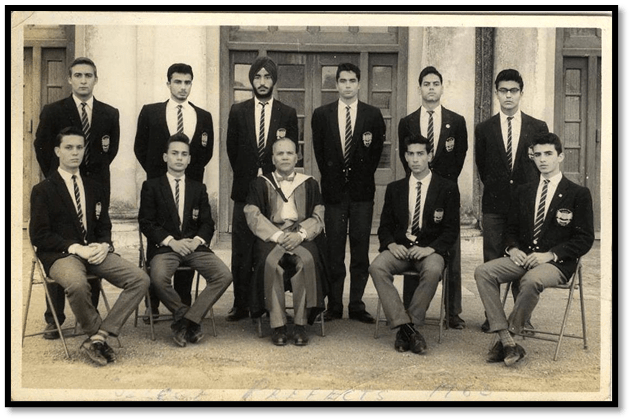
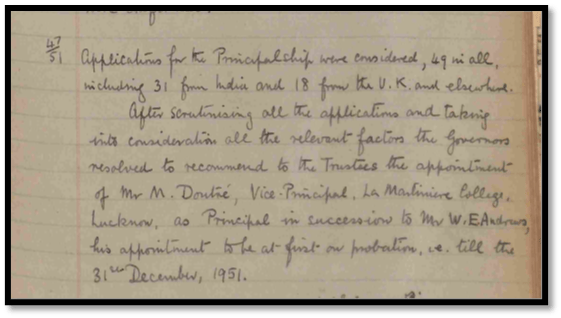
The heartburn and petty games of one upmanship regarding a premier European School being administered in a newly independent India were assuaged with the appointment of the first Indian citizen as the Principal of the College. The demography of the College was further changing in this manner. Mr Meredith Doutre was a former pupil, master and carried out multiple duties for sports and the NCC. He moved from the College, briefly, to garner administrative experience, returning as Vice Principal. With his appointment, the College evolved into a leading ‘Anglo-Indian’ school. La Martiniere College, Lucknow had attracted several applicants for the post of Principal following the retirement of Principal W. E. Andrews, the last European Principal. As many as 18 applications were received for the post from Britain and elsewhere, beyond India. The Governors, in their wisdom chose an indigenous candidate, who represented the past and the present. An Anglo-Indian, Mr Doutre had the added advantage of being an alumnus of the College at a time when the first Indian boys were being admitted as pupils. As a Foundation pupil, resident for all his years in school, he had served as a teacher, introduced the NCC and been promoted to Vice Principal. The 1951 saw the commencement of a very Anglo-Indian school.
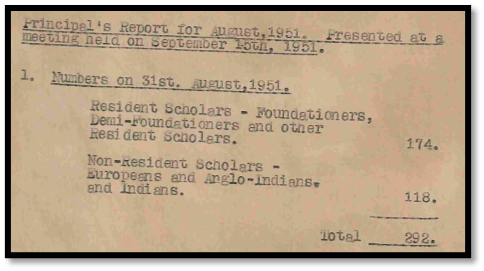
Mr Doutre attempted to drop the nomenclature of European and Indian from among the Resident Scholars. In August, 1951, no distinction was made to describe boys on the basis of race for those residing in the Boarding House. There were in fact, 174 resident scholars, far outnumbering the day-scholars of mixed communities, totalling 118 boys.
The economics of running the College had to be reviewed. It is to be remembered that the entry class was Class 4. A major step was to introduce two sections of the junior-most classed, i.e. 4, 5 & 6, to generate further revenue and to meet the growing demand for quality education at this College which was gradually being ‘indianised’. In effect, revenue that would have been possible from receipt of fees from the classes below class 4 was not considered. May of those junior boys were accommodated at La Martiniere Girls’ School, which had seized the opportunity to fill that vacuum in the academic programme. It would take many years for 5 more classes to be added – commencing from Nursery to Class 3 and further financial difficulties for multiple sections in all classes to be introduced in phases.
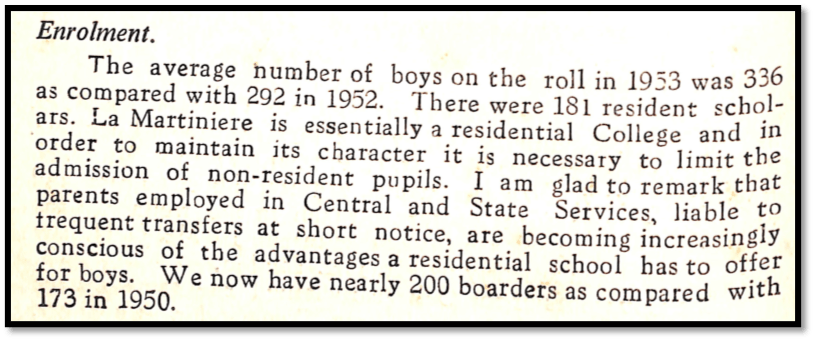
In 1953, the Principal reported on numbers, confirming restrictions due to a lack of infrastructure. Nevertheless, it was possible to introduce two sections in classes 4, 5 and 6.

In 1953, the Principal reported an average number of 336 boys on roll. It was made clear to all that “La Martiniere is essentially a residential College and in order to maintain its character it is necessary to limit the admission of non-resident pupils.”
Demographic change is also reflected in the choice of language. A subtle change in categorization from the traditional ‘European’, ‘Anglo-Indian’ and ‘Indian’ that had existed until 1951 was altered to ‘Anglo-Indians’ and ‘non-Anglo-Indians’ in the Report presented to the Governors in 1954. La Martiniere College, Lucknow had entered the Anglo-Indian period of its history.
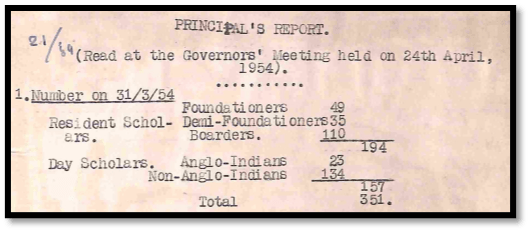
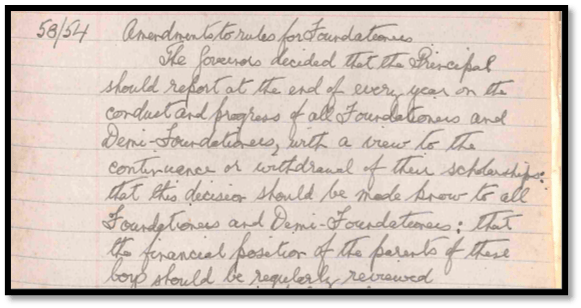
Independent India was unprepared to consider subsidy for Foundation pupils without adequate proof of benefit. Claude Martin’s bequest had not placed riders on academic eligibility of Foundation pupils. The concept of ‘meritorious need’ was a term first used in 1879. The nature of care offered to such boys was nebulous. As academic competition became more stringent, the expectations of Foundation pupils also underwent change. Academic excellence was gradually becoming the cornerstone for eligibility. This was evidenced in 1954, when the benevolence of the Foundation began to be classified as a ‘scholarship’, suggesting an award for outstanding academic achievement. For this, it was attempted to institutionalise the monitoring of and accountability in academic progress for continuance of the Foundationer status. The Governors went as far as instituting ‘Amendments to rules for Foundationers’ deciding that “the Principal should report at the end of every year on the conduct and progress of all Foundationers and demi-Foundationers, with a view to continuance or withdrawal of their scholarships.”
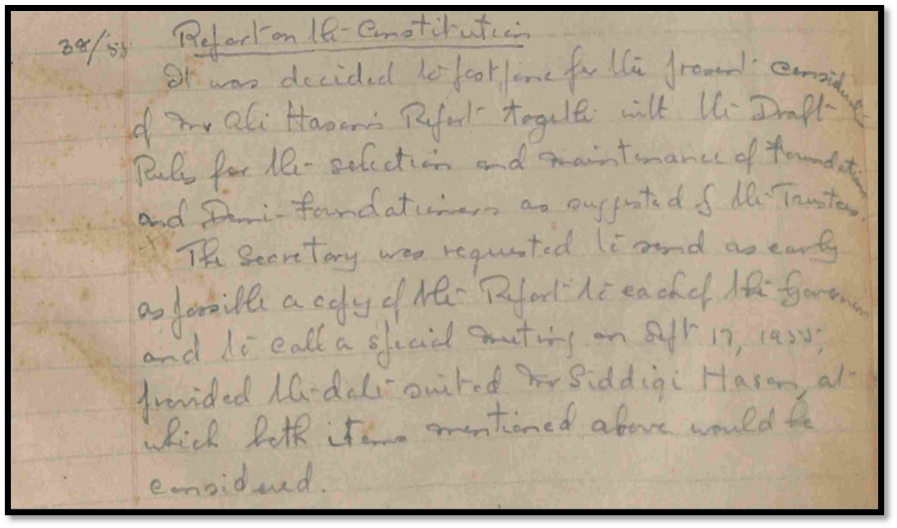
The seriousness of the proposal can be assessed by the discussion planned on ‘Draft Rules for the selection and maintenance of Foundationers and demi-Foundationers as suggested by the Trustees in September, 1955:
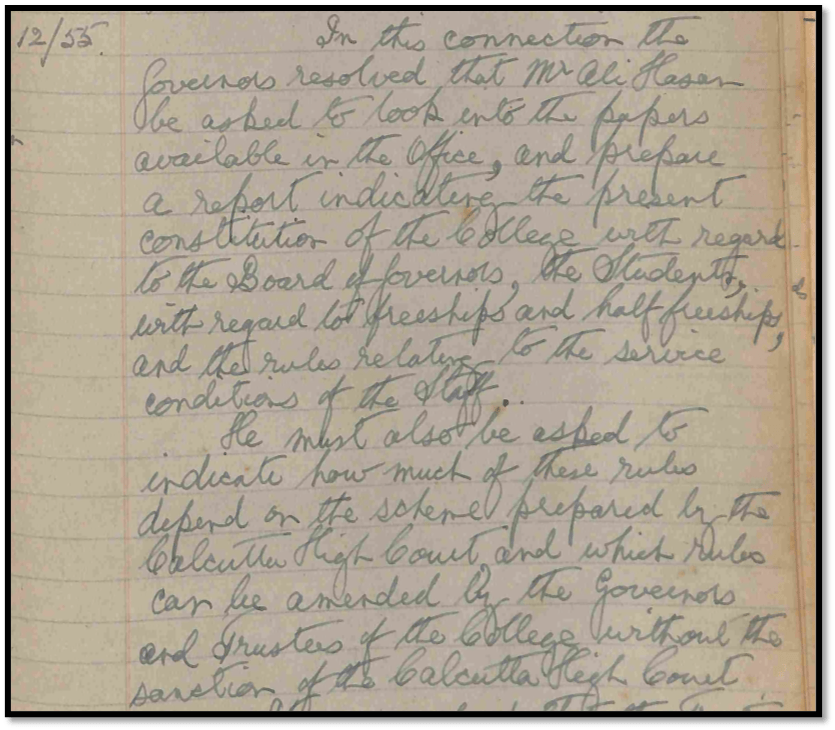
Caution was exercised before this Draft was considered. Legal opinion was sought on whether it would be possible under the Constitution of the College “with regard to the Board of Governors, the Students, with regard to freeships and half-freeships …” The Govenors sought to circumvent the sanction of the High Court in Calcutta to effect these changes.
The hot potato was dropped at least three times during 1955 alone, with postponements.
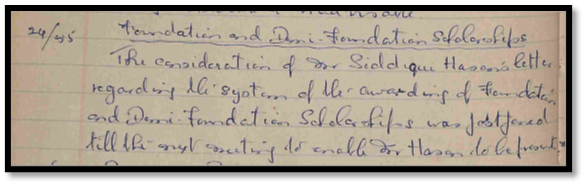
In the event of the proposal being a non-starter, the Principal was invested with the authority to consider applications for Foundation pupils for the academic year.
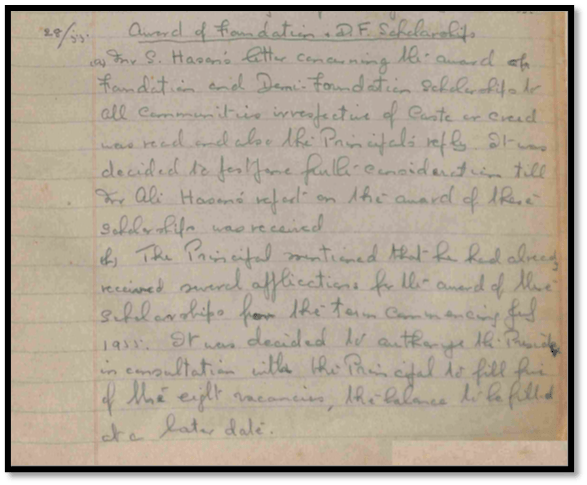
Some months later, the Governors took a decision that was well-aligned to the democratic nature of the State, when it was resolved that “in the matter of Foundation and Demi-Foundation scholarships, no difference will be made on the grounds of race or religion, but that each application should be considered on its merits.”
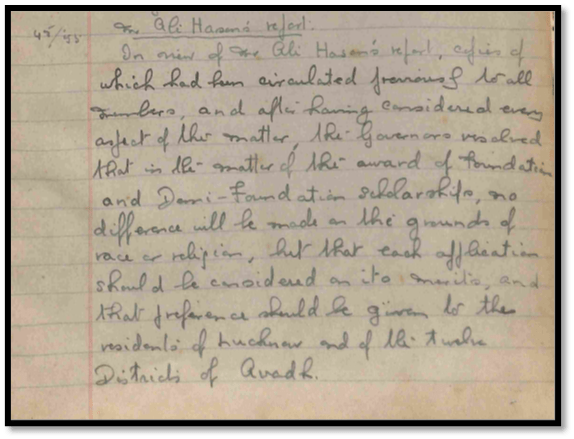
This was a major statement on policy, likely to affect the demographics of the institution, in keeping with the ideals of the State.
The Principal’s Annual Report made mention of this and gave credit for this to the Trustees and Governors in a gesture of gratitude:
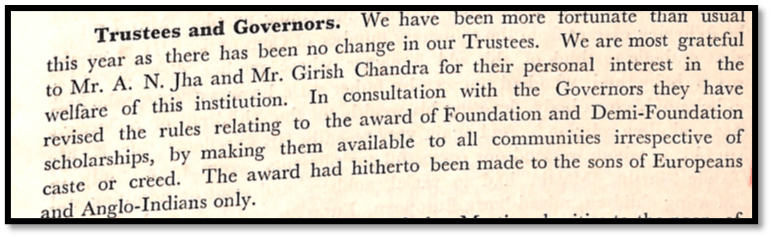
Similarly, official reports no longer referred to racial distinction. The classification as European, Anglo-Indian and Indian was discontinued at the same time.
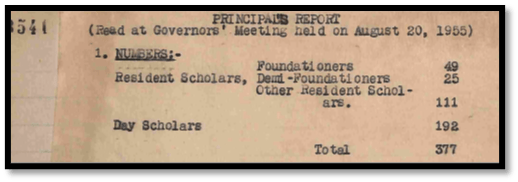
Between the close of the term in December 1954 and the new session in 1955, a further demographic change was observed. The number of day-scholars had overtaken the number of resident scholars. On 4 December, 1954, the Principal reported that there were 184 resident scholars and 146 day scholars. On 26 February, 1955, the numbers were: Resident Scholars 173, while Day scholars had increased to 211.
The Principal recorded in his annual report:
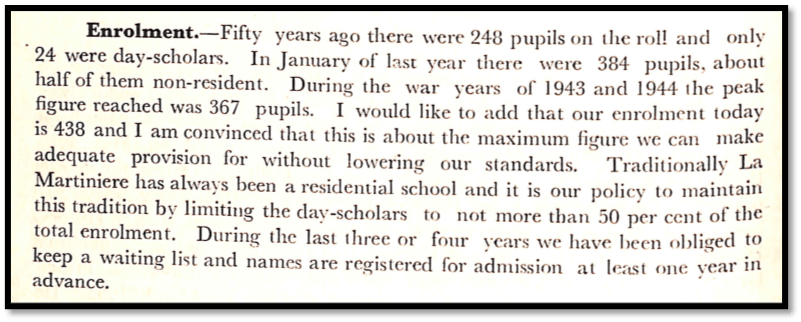
The struggle between admission of resident scholars, based on the number of applications was counter-balanced by the demand for admission for day scholar pupils.
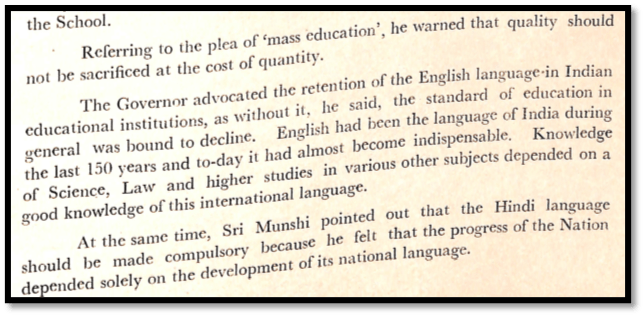
The rapid increase in numbers was in keeping with Government policy for ‘mass education’, a fact endorsed and encouraged by the Governor of the Uttar Pradesh who attended Prize day in March, 1956 as Chief Guest:
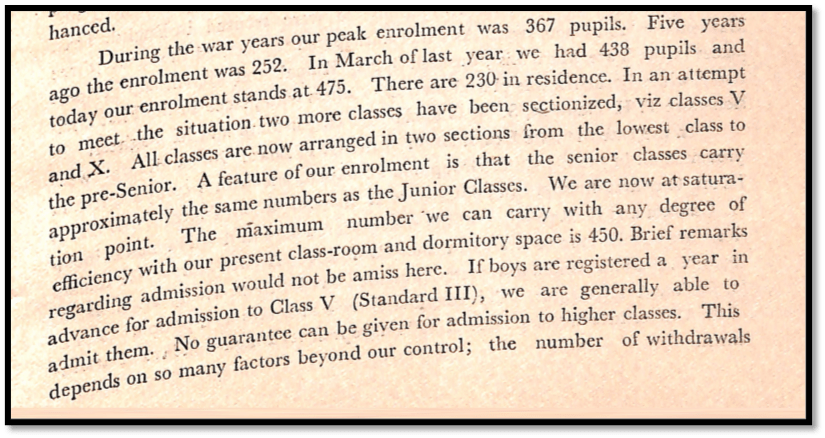
The Principal’s Report for 1956 described the way the number of classes were reorganised. The traditional ‘Standard’ was now changed to ‘Class’. The entry class to La Martiniere had been Standard III, which was now redefined as ‘Class 5’. The demographic changes because of this reorganisation were not tremendous, but the fact that a double section was introduced in all classes, indicated an ever-growing number of pupils. Enrolment in 1956 was a total of 475, of which 230 were in residence.
It was by means of a Government Order from the Inspector of Anglo-Indian Schools, U.P. that the reorganisation of classes had been conducted.
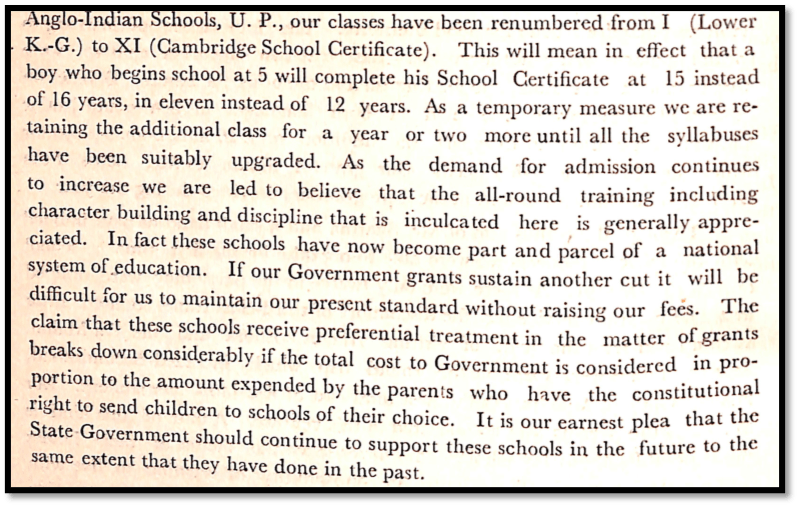
By 1957, the struggle to cope with a limited amount of fees being charged for quality education at La Martiniere was becoming a significant issue. Raising fees was not possible in practical terms due to the College receiving a reduced Grant-in-Aid, from the Government, with its attendant difficulties in bureaucratic delay and accountability. An increase in fees would necessitate the sacrifice of the Government Grant, while an increase in fees, without the Grant was bound to affect the demographic structure of the College. La Martiniere was likely to become an institution for the rich. These were difficult times requiring a balance between finances and social responsibility.
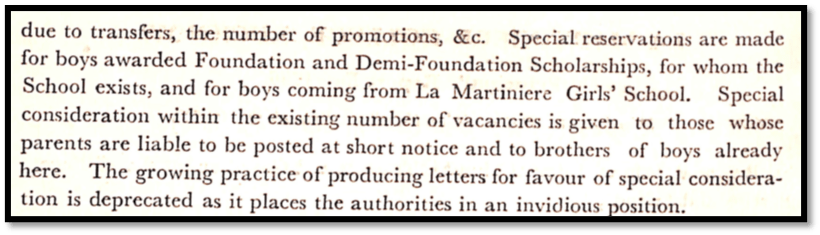
The Principal spelled out that priority in admission was afforded to boys receiving their primary education at La Martiniere Girls’ School, due to such classes not existing the College. Preference was also offered to boys whose parents were on transfer to Lucknow; boys with siblings in La Martiniere and above all boys awarded Foundation and Demi-Foundation ‘Scholarships’. While the special privilege was referred to as a ‘scholarship’, the Principal was quick to state that it was for such Foundation pupils “for whom the School exists.”
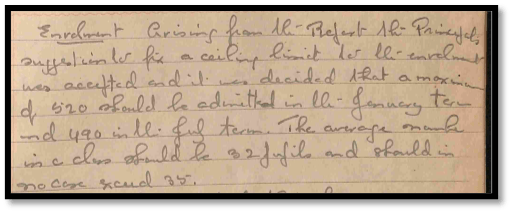
Numbers continued to soar with the effect of a double-edged sword. Additional revenue was required and welcome; an increase in numbers without a corresponding improvement in infrastructure and appointment of staff would be self-defeating. The matter was brought to the notice of the Governors in March 1958. Minute 5/58 of the meeting held on 15 March, 1958 records the suggestion of a ceiling limit for the enrolment of pupils, ensuring that the average number per section should be 32 pupils and should in no case exceed 35.
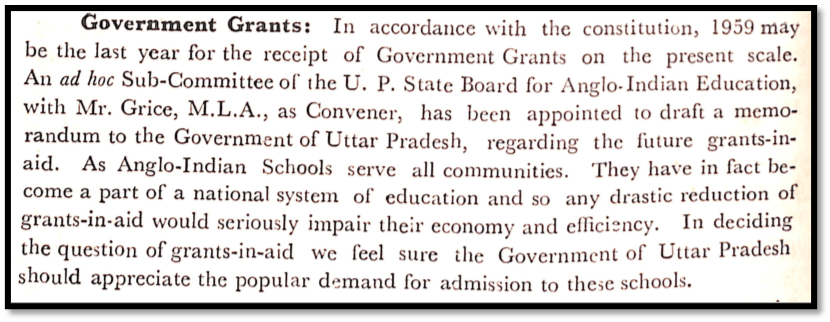
A note of caution was shared with parents in the principal’s Report of 1958. It was warned that 1959 might be the last year for the receipt of Government Grants. The Anglo-Indian schools would be severely affected in economy and efficiency. It was pointed out that following Independence the demographics of the institution now included members of all communities. The Anglo-Indian schools, while providing unparalleled service to a cross section of society had by then become an integral part of the national system of education. The very existence of the schools in the present efficiency would be jeopardised.
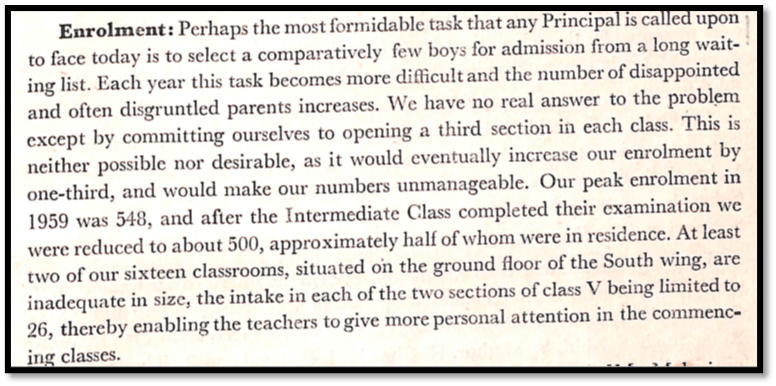
At the close of the decade which saw La Martiniere College, Lucknow evolve into a fully Anglo-Indian school, the words of the Principal as the decade ended in 1959, were significant.
 Macky's Mart
Leave a comment