
THE DECADE OF INDEPENDENCE
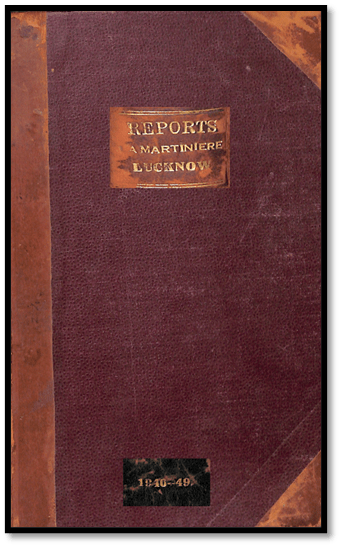
It is fortunate that the College has scrupulously maintained administrative records, the primary source of which are the Minutes of the meetings of the Local Committee of Governors and greatly, the Annual Reports of Principals. From these records, it is possible to map and trace the demographic changes in the overall student body and to some extent, receive an explanation for what precipitated these changes.
The looming prospect of Independence and the cessation of privileged status of La Martiniere College as a European school had already cast a shadow on the economic status of the College. The first group to be affected were the Foundation pupils: For more than a century, the demography of the foundation pupils had been whittled down to include only children with European ancestry and Anglo-Indians; the benefits for religious communities, “Hindoos and Mahommedans’, had been allowed to lapse. Independence would bring these features to light, once again. Moreover, it was perceived that fully-subsidized education for a socially disadvantaged group of boys was a waste of resources in times when the College would be expected to fend for itself. Receiving Government aid would prohibit positive discrimination based on community or religion.
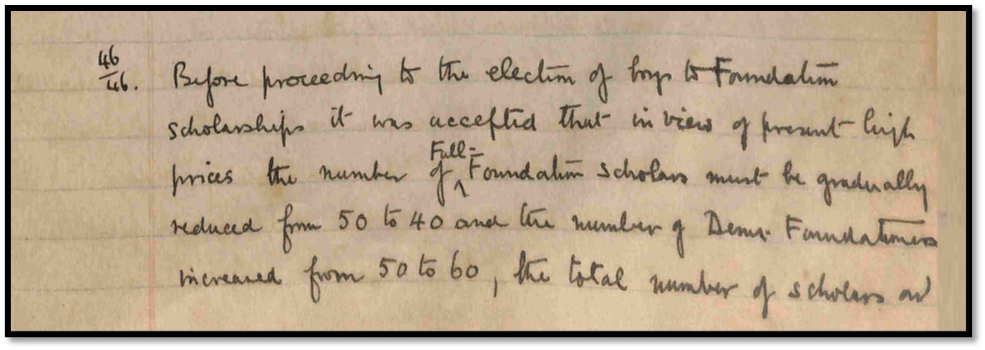
On 20 April, 1946 the Governors surrendered to economic compulsions and adopted a decision in policy to reduce the number of full-Foundationers from 50 boys to 40 boys, while concurrently increasing the number of demi-Foundationers from 50 boys to 60 boys. Care was exercised not to disturb what had now by long practice, become the magic number of 100 Foundation pupils.

Further, with the Independence of India imminent, the Trustees sought to place the financial status of the institution in order, before the transfer of power. A significant letter No 12 (I) M.T. 46 of 31 May, 1946 was received by the Governors delineating the financial position of the Trust funds and suggesting a fresh allocation of certain heads. A sub-Committee was set up to examine the statement and propose suggestions. This was duly carried out. The representation made by the Governors to the Trustees regarding various components of the letter included suggestions on the manner in which unutilized funds be routinely reinvested “On a fixed date annually (and that) the Trustees might withdraw such savings in round thousands for credit to their General Fund in Lucknow where they are not likely to lie uninvested.” The Governors also reminded the Trustees of the provision in the Founder’s Will to apply any residual funds “to the increase of the several establishments at Calcutta, Lyons and Lucknow … (as) the now remaining residue is likely from time to time to be augmented … that the same ought to be distributed … divided and applied to the increase of the said Establishments in equal proportions.”
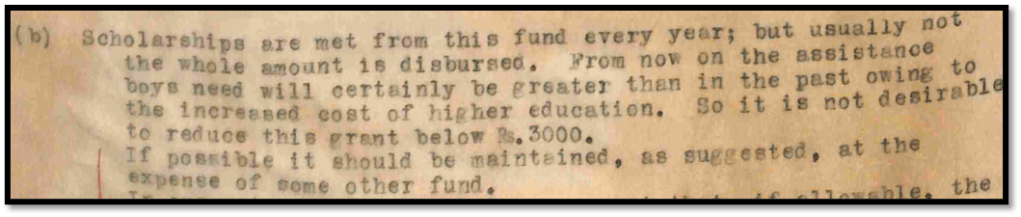
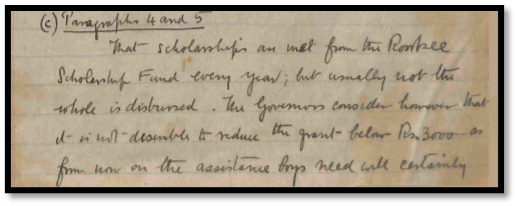
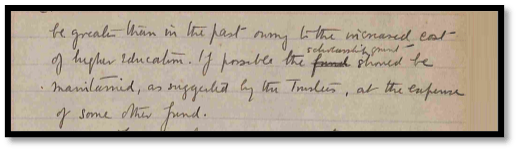
Scholarships were also disbursed from this Fund, including the Roorkee scholarship which by now had become a misnomer, as such scholarships to fund higher education of needy pupils were no longer earmarked for the Roorkee College of Engineering alone:
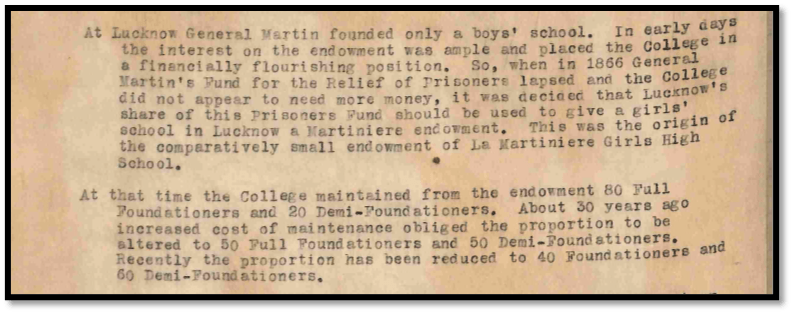
The Governors reiterated that the Lucknow establishment was founded only as a boys’ school. At that time, funds were adequate. Surplus could therefore be shared for the establishment of a Girls’ school in Lucknow. The Governors had to admit the changing demographics in the College due to straightened economic circumstances and the additional danger of Martin’s charity being further reduced.
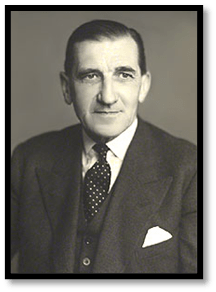
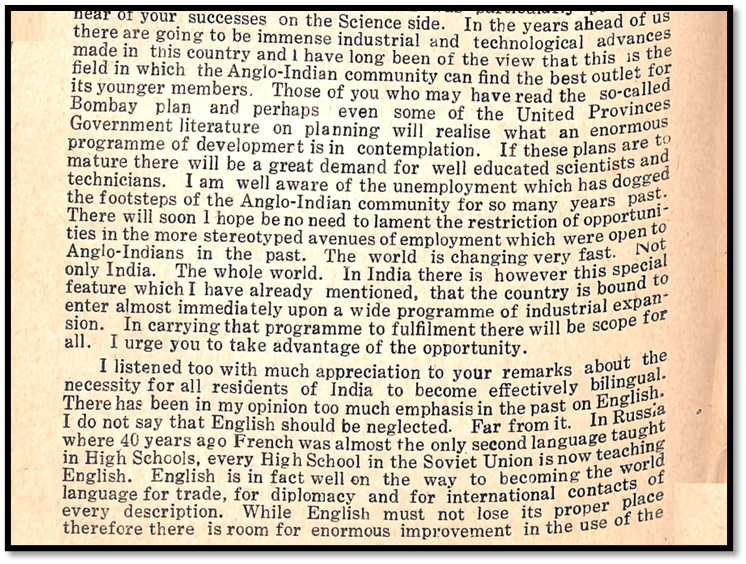
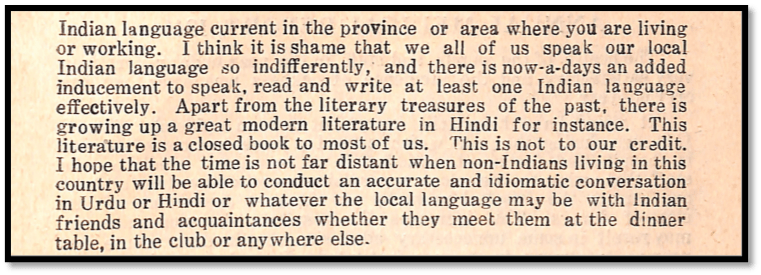
The transition from British rule to ‘Swaraj’ became evident in the invitation to the Visitor of the College as Chief Guest at Prize Day in 1947 and 1948. Sir Francis Wylie, the highly titled last British Governor of the United Provinces, attended Prize Day on 14 March, 1947. Sir Francis attempted to assuage the feelings of uncertainty, bordering on despair, at the commencement of this new era in India. The Anglo-Indians being left behind in India, he felt had “no need to lament the restriction of opportunities in the more stereotyped avenues of employment which were open to Anglo-Indians in the past.” He also addressed the language issue, opining that he felt “it is a shame that we all of us speak our local Indian language so indifferently.”
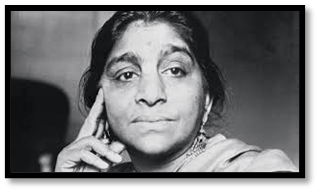
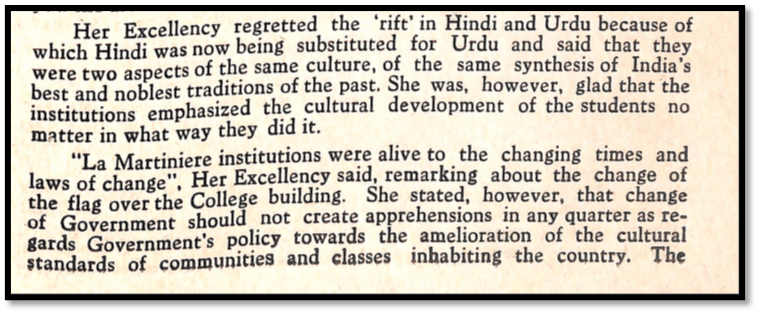
In contrast, the following Prize Day held on2 March, 1948, the affable Mrs Sarojini Naidu, the first Indian Governor of the United Provinces attended as Chief guest and spoke feeling-heartedly about the recent assassination of Mahatma Gandhi. Seeming to prognosticate the immediate future, warning of the casualty of language in a time when demographic changes were taking place due to displacement, migration and religious loyalties.
Her remarks at La Martiniere College were widely reported:
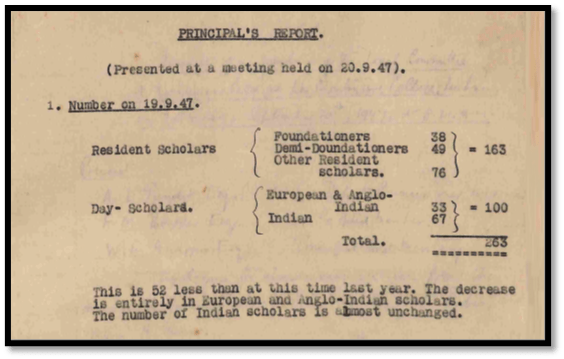
The demographic changes in the immediate aftermath of Independence were summed up by the on-roll numbers reported by the Principal, a month after Independence. Principal Andrews attributed “the decrease in numbers is entirely in European and Anglo-Indian scholars. The number of Indian scholars is almost unchanged.”
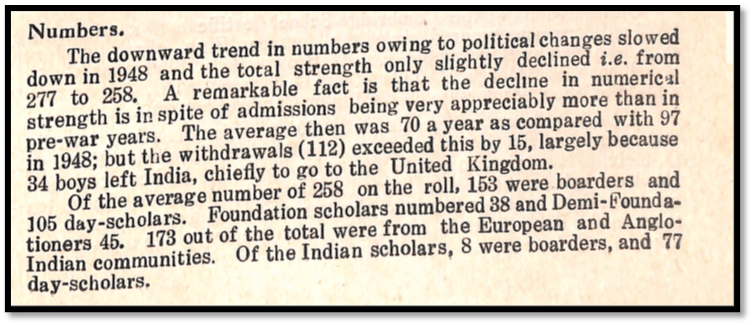
The demographic grid was once again changing. In the Annual Report of 1948, the numbers had reduced further due to migration. Boys left to go to England or Australia, while 14 returned to Burma. Not only was their physical presence lost, but such migrating children and teachers were also taking with them the amorphous culture that had made up the ethos of the College until then.
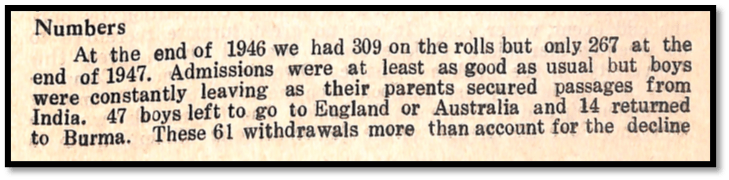
Simultaneously, the number of ‘Indian’ scholars increased, but attended as day scholars. There was a new-found pride that there had been three Indian resident scholars the previous year which had increased to five in the 1948.

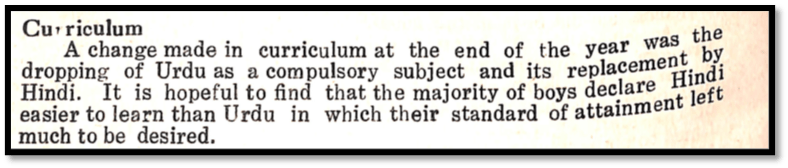
With demographic change came a change in the curriculum, reflecting contemporary needs and incipient political requirements.
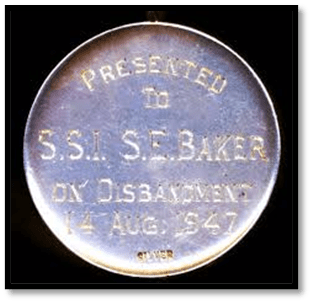
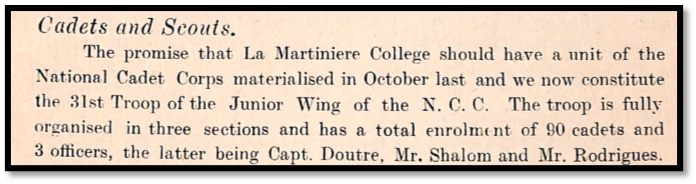
The nature and composition of the uniformed groups also underwent change. The training in military exercises and use of weapons that commenced after the uprising of 1857 had been necessitated by an unspoken caution of local insurrection for which the European and Anglo-Indian communities had to be prepared. The Oudh Rifles, converted to the Auxiliary Force had been exclusively constituted of European and Anglo-Indian cadets. This was disbanded on the eve of Independence, as the College waited for the new National Cadets Corps (NCC) to be introduced into the College.
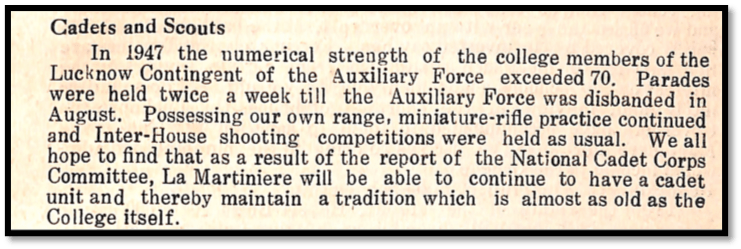
The establishment of the National Cadet Corps in the College in October, 1949 was a continuum of successive systems of national service and para-military training. Unlike its previous avatars, the NCC was exclusively for Indian citizens. The transition was smooth with the experience of Auxiliary Force (India) Capt. Meredith Doutre (later Principal), who now commanded the first College NCC unit.
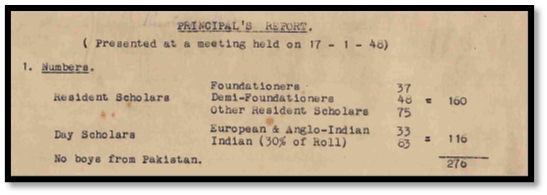
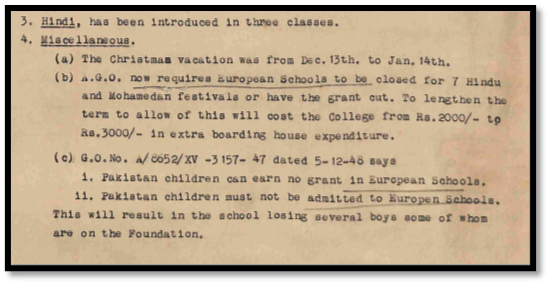
Administrative records usually present facts devoid of commentary. It is often necessary to read between the lines to recognize the significance of the information recorded. The first Principal’s report to the Governors in January 1948 submitted bland facts, which reflect the subtle forces working towards the change in demographics in the College. These included:
- A distinction between European & Anglo-Indian Day scholars, compared to ‘Indian’ day scholars, was now recorded at 30%.
- A definite statement was issued that there were “No boys from Pakistan.”
- The introduction of Hindi in three classes of the College.
- A Government Order requiring all European schools to be closed for 7 Hindu and or Mohammedan festivals at the risk of having the Government Grant cut.
- Pakistani children could earn no grant in European schools
- Pakistani children must not be admitted to European schools.
The only comment on the above was the Principal’s statement that “This will result in the school losing several boys some of whom are on the Foundation.”
The financial turmoil caused by the uncertain receipt of Government grants, migration from and reduction of revenue for the College demanded that stringent steps be taken for financial health. The Governors recorded in January, 1948 that it was difficult, despite numbers being re-juggled, “at the prices then prevailing, to maintain 40 Foundationers and 60 demi-Foundationers now entertained.” There was need to increase income. As had happened before, whenever there had been financial difficulty, the boys on the Foundation were affected. It was proposed as a ‘partial solution’ to:
- Charge the demi-Foundationers Rs 25/- per month throughout the year (garnering an additional Rs 3000/-)
- Reduce the number of Foundationers to 30.
Raise the number of demi-Foundationers to 70 (collecting an additional Rs 3000/-)
It was recognized that this was still inadequate and that the only real solution was playing with the dangerous idea to lease out land for building.

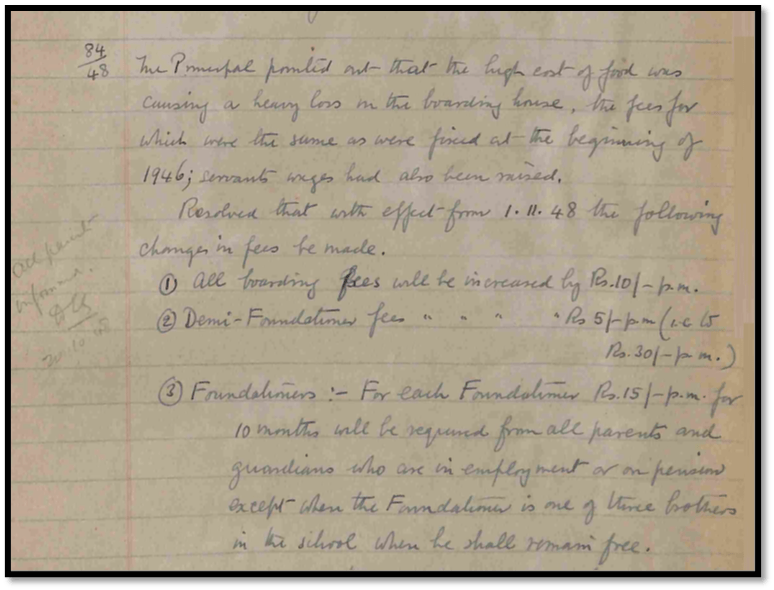
By October, 1948 the financial position was grimmer. Once again, money had to be extracted from those whom it had been a sacred covenant to take care of. Therefore, along with an increase of fees by Rs 10/- for Boarders, demi-Foundationers would pay an additional Rs 5/- per month, bringing the payment per mensem to Rs 30/-. In an unprecedented decision, Foundationers, for whom the school had been established, would now be required to pay Rs 15/- per month. This was with certain gestures of charity. Such payment would be demanded for only 10 months of the year, from all parents and guardians who were employed or on a pension. A full free-ship was offered to one candidate if there were three siblings in the family at a given time reading in the College.
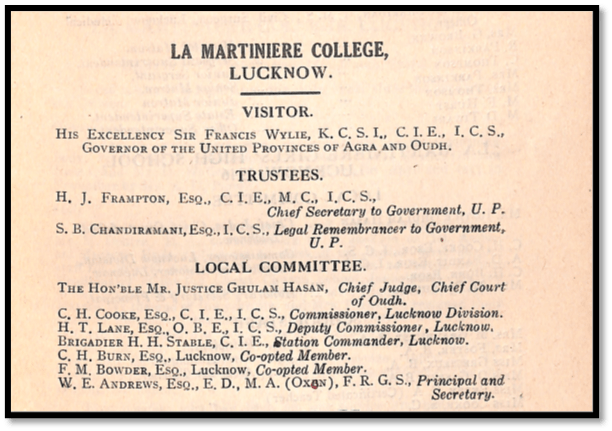
The demographics of the College include not just the student body, but the Faculty, Staff, Management and Administrators. Just before Independence, the composition of the officers of the College included only two Indian members – Mr S. B. Chandiramani, ICS, Legal Remembrancer as Trustee and Mr (Justice) Ghulam Hasan, Chief Judge, as Chairman of the Board. The officers of the College as on 31 December, 1946 were as follows:
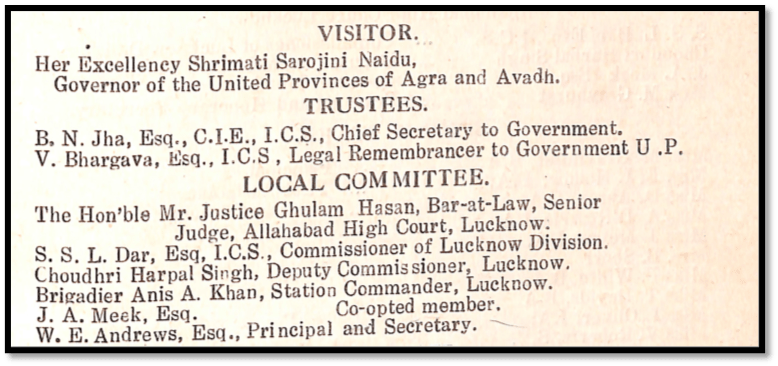
Following Independence, the year 1948 saw the composition of the Governors change. The only non-Indian members of the Board were the Principal, Mr W. E. Andrews and Mr J. A. Meek an old boy, (1913-1922), who had been co-opted to the Board. He professionally served as the Managing Director of Greaves and Cotton, Cawnpore. The officers of the College as on 31 December, 1948 were as follows:
On Prize Day, 1949, the Principal reported:
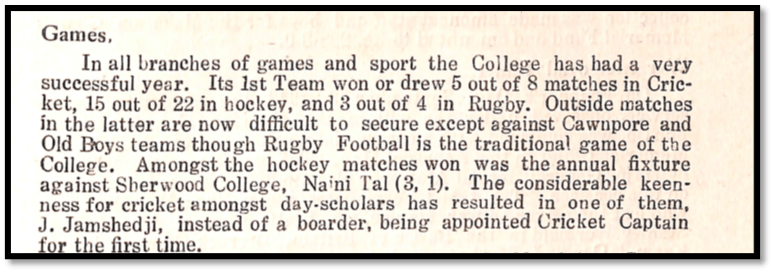
The demographic changes were reflected on the games field as well. In a significant first, a day-scholar was appointed skipper of the College cricket team. J. Jamshedji the first non-European captain appointed as Cricket captain was a Parsi lad.
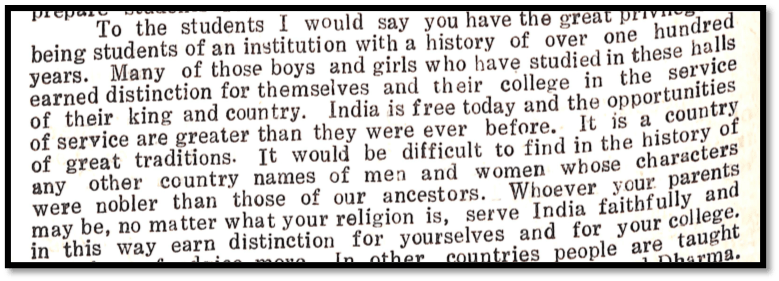
A year after Independence, Dr Sampurnanand, Minister of Education, United Provinces attended as Chief Guest at Prize Day, 1949. He enumerated the immediate issues that Independence had thrown up for the College: “A passing reference was made in one of the reports to the political changes that have taken place in the country. These changes are reflected in several places in the Reports. The changes in your environment, the rising percentage of Indian students, the introduction of Hindi and some changes in the staff are the direct result of these political changes.” He added that loyalty to King and country was now replaced by a greater allegiance:
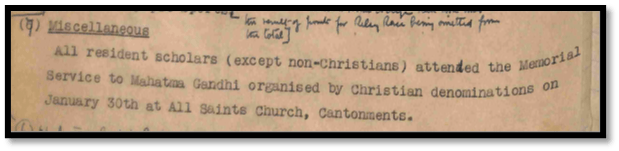
Under the new dispensation, certain elements of school life, once taken for granted, had to be pussy-footed. This included the growing consideration of religious affiliation, especially in the aftermath of the assassination of Mahatma Gandhi. It needed to be stated in the Principal’s report to the Governors that only Christian scholars attended a memorial service in the precincts of a Christian church to commemorate Mahatma Gandhi. The secular credentials of the institution, contributing to and influenced by changing demographics, were still to be established:
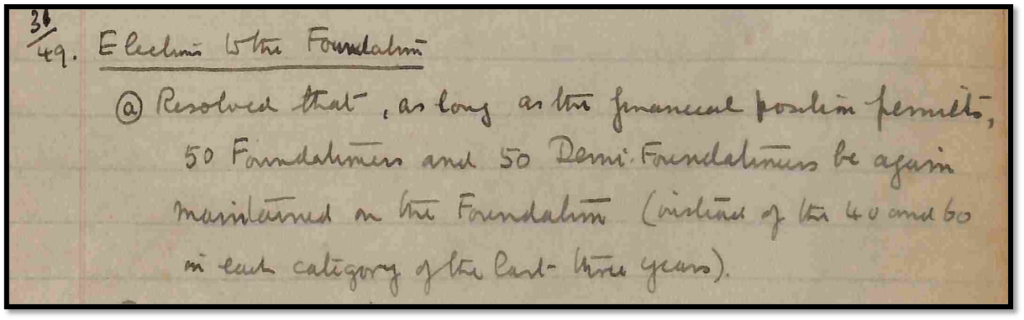
The vicissitudes in the fortunes of the Foundation pupils improved when the Minutes of the Governors of 2 April, 1949 reverted to the previous number of boys on the Foundation:
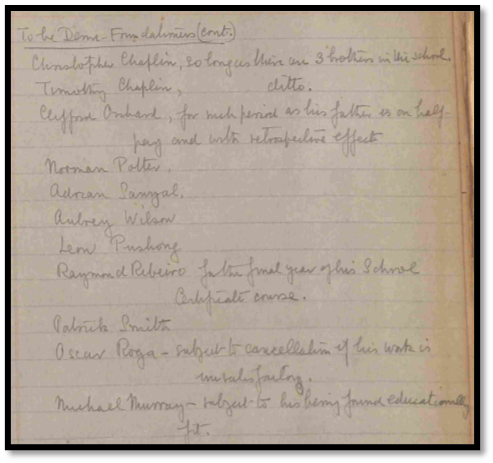
Despite the liberal attitude towards racial distinction, forced by Independence and the decisions of the Governors, the Minutes of 15 October, 1949 record a significant diversion in the case of a boy named Adrian Holwell Sanyal. The Governors instructed that the ‘parentage’ of the boy needed to be considered for favourable inclusion as a Foundationer in the following month.
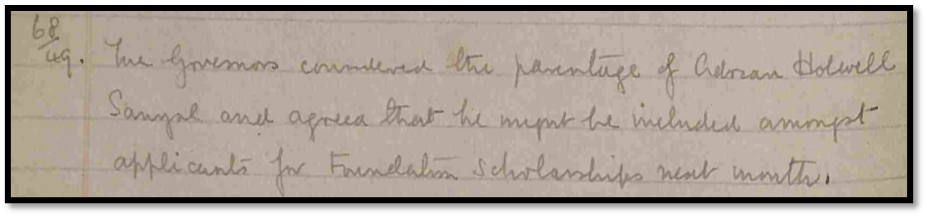
Adrian Holwell Sanyal apparently passed muster. The Minutes of 19 November, 1949, record his name as one of the demi-Foundationers elected. He was later made a full Foundationer till 1955.
There is a poignant footnote to this boy’s tenure at La Martiniere College, Lucknow.
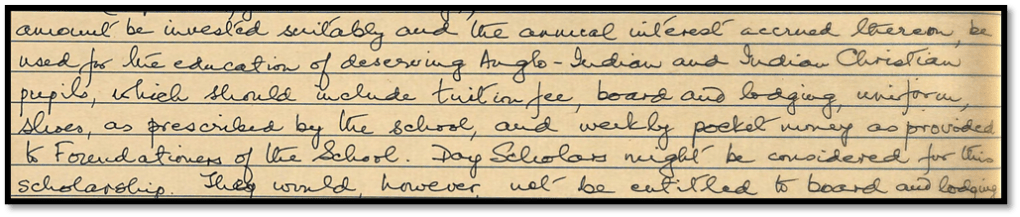
In 2005, exactly 50 years after he graduated from the College, Mr Adrian Sanyal bequeathed his property in Mumbai to the College. He instructed that it be sold and the proceeds realized were to be used by La Martiniere College, Lucknow for subsidizing/freeship to deserving boys of the Christian community only, for education only. He wished “to return in good measure the facility extended to him during his youth. What he was he owed to the sense of values he imbibed at La Martiniere College, Lucknow.”
The bequest, with certain conditions became operative in 2005 when Rs 52 lakhs was forwarded by his estate to be invested and the annual interest accrued thereon be used as he had stipulated. A further Rs 8 lakh was made over to the College sometime later by the Income Tax department, following a representation by the College.
The years following Independence provided several vacancies, and consequently a number of applications for admission by Anglo-Indian students. Though the number of the community accommodated had always been significant, with the migration of European boys, the vacancies were filled up more by young Anglo-Indians. A survey of the fluctuation in demographics was recorded in the Annual Report of 1949:
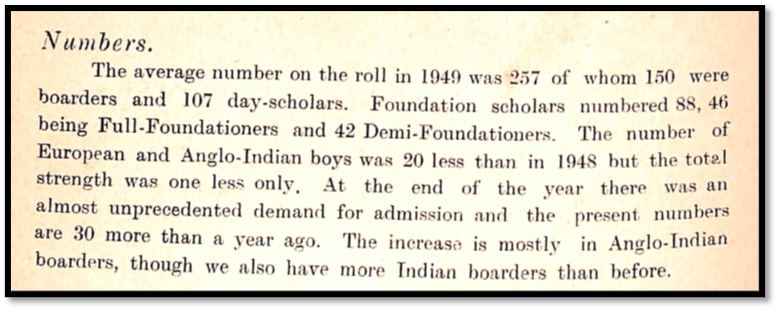
At the close of the decade, records still maintained the distinction of European and Anglo-Indian scholars in comparison to ‘Indian’ scholars. There was increased pressure from Government, including threats and warnings for the College to be denied Government aid unless at least 40% of enrolment was made of communities other than Anglo-Indian.
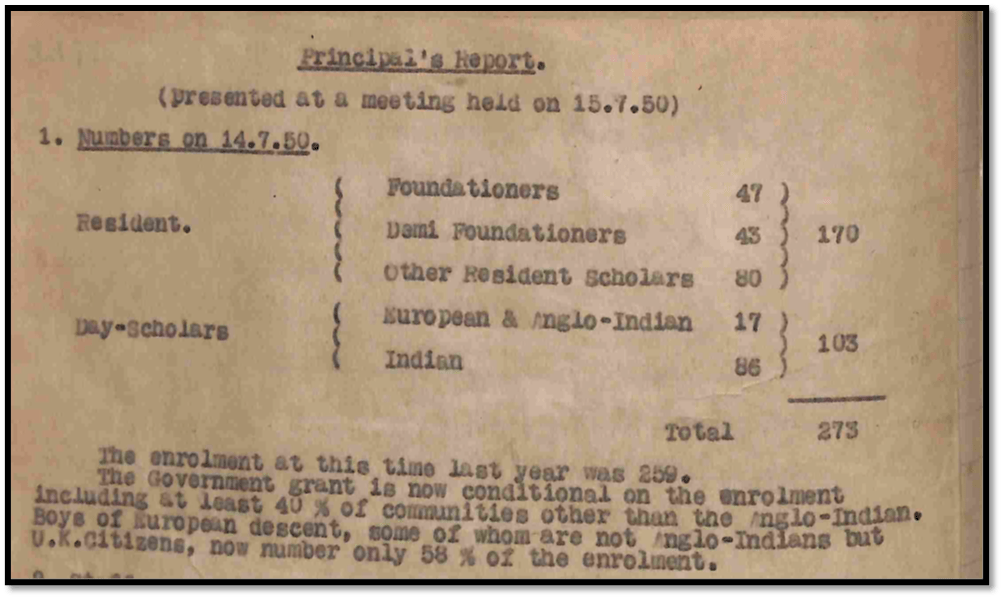
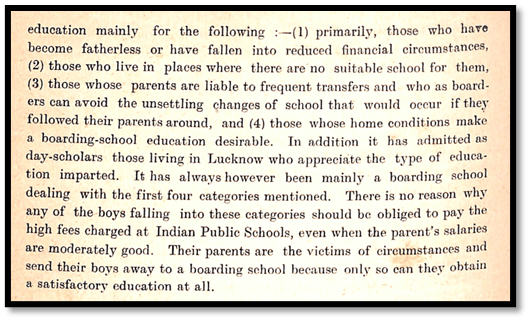
At the close of the eventful fourth decade of the 20th century, when India achieved her Independence, there was opportunity for rumination and justification for the continuance of what were now defined as Anglo-Indian schools. Principal W. E. Andrews in his swansong at Prize Day, 1950 explained La Martiniere College was not likely to be a school where only the well-to-do could attend, as it was inconsistent with the wishes of the Founder. The College provided education to pupils with special requirements for five main reasons:
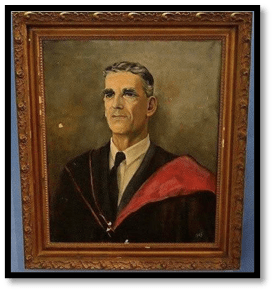
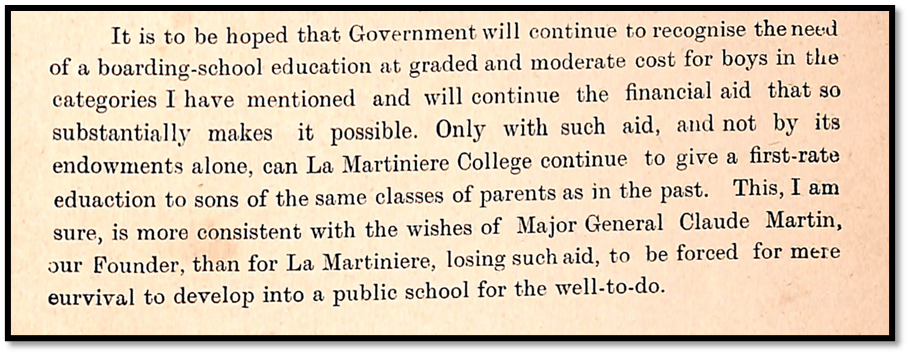
Principal Andrews concluded his speech, the last formal statement of his tenure as Principal by adding:
 Macky's Mart
Leave a comment