
INDEPENDENCE TO THE END OF THE 20TH CENTURY (1947-2000)
This Part deals with the second half of the 20th century and roughly corresponds to the time scale of the Independence of India (1947) to the end of the century (1999)
INDEPENDENCE AND ITS AFTERMATH
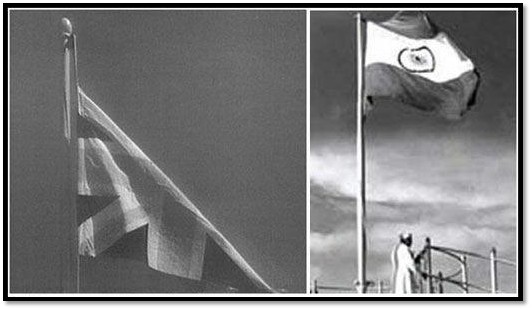
In the years leading up to Independence, La Martiniere’s Anglo-Indian community was both supported by the College and advised by authorities to adapt to changing times. Prize Day speeches by leaders encouraged education, vocational training, and integration into broader society; warning that privilege alone would no longer guarantee security. These messages aimed to prepare the community for uncertain prospects by emphasizing the importance of adaptability, skills development, and public service as opportunities shifted after Independence.
In the first two decades, post-Independence, the Institution mutated from a European School into a leading Anglo-Indian institution, recognized as such by Governtment fiat. The special privileges that were guaranteed to the handful of Anglo-Indian institutions in Lucknow protected the administering of the College. The strong ethos of western values, College traditions, practices and Christian principles, especially charity, was enjoyed by the dwindling number of Anglo-Indian boys now attending the institution, especially as Foundation pupils. With the explosion in the number of admissions, necessary to keep the institution afloat, the Anglo-Indian boy was submerged by the majority of non-Anglo-Indian pupils. Demographics were altered due to the increase in the overall size of the student body.
With the birth of a new nation, India was rapidly ‘reclaimed’ by those who saw themselves as permanent inhabitants, with common racial stock. The horrors of the partition of India on religious grounds skewed the national demographic picture, which would have lasting effects in Independent India and the newly formed country of Pakistan. La Martiniere College, Lucknow could not be impervious to these changes, necessitated by reality, legal compulsions, economic requirements and reweaving of the social tapestry. The response to these changes was pragmatic acceptance, by acknowledgement of the changed circumstances.
At the time of Independence, school education was not widespread. European schools were limited. The Anglo-Indian model of education, combining western thought and international systems of values, was highly prized.
At La Martiniere College, Lucknow, Independence did not mean a mere reshuffling of chairs, but a gradual blending of different systems of values. This was now becoming the most challenging experiment in maintaining tradition while adjusting to the requirements in the great melting-pot of the new Indian democratic system. Economic challenges were at the forefront of the many challenges that the institution had to face. In a democracy that was inherently in economic doldrums, it was a tight rope walk to raise fees for quality education and facilities, while still attracting the largest number of children required for self- sustenance. In the process, the casualties were unfortunately the Foundation scholars, whose numbers remained static and whose subsidized education was seen as charity to counteract poverty, without the veneer of merit.
Demographic changes are generally characterized by changes in ethnicity and socio-economic status distribution. In the context of the College, there was the added element of migration due to Independence and the Anglo-Indian/European diaspora. Significantly, those with very low incomes could not afford the costs associated with migration.
La Martiniere could pride itself on attracting pupils from the entire sub-continent. Boys from vastly different geographical regions could seek admission to La Martiniere College, Lucknow as Foundation pupils, owing to the bequest of the Founder. When the College was made up of less than 200 pupils, 100 of these boys were accommodated by fully subsidised fees. These children, and by extension, their families who benefitted, made up a substantial quantity of the student body. This was gradually diluted due to a variety of factors. Chief among them was the inability of those entrusted with the control of funds of the institution from making wise investments according to the changing opportunities for farming out capital to further the cause of contemporary charity. The disinterest in investment and false justification for conserving funds has led to an eventual cessation of all monetary assistance to the College. This is despite La Martiniere College, Lucknow being the chief beneficiary of Claude Martin’s Will, leaving it financially emasculated.
The period of 1940-1955 was a time of major demographic upheaval for the Anglo-Indian community, primarily defined by the independence of India in 1947, which led to a significant exodus and a sharp decline in their population in the subcontinent. Large numbers of Anglo-Indians emigrated, primarily to the United Kingdom, Australia, Canada, the United States and New Zealand.
Following 1947, the community experienced a rapid and large-scale migration due to several factors. As a community closely associated with the British Raj, many Anglo-Indians felt a sense of insecurity and “betrayal” in a newly independent India. They were a world minority, a bridge between two cultures but not fully accepted by either the British or the Indian society and faced an identity challenge in the post-colonial era.
The community’s social status declined sharply after the British left. The guaranteed positions they held in strategic services such as the railways, customs, and postal and telegraph services, which had provided a secure socio-economic niche during the Raj, were no longer guaranteed.
Primarily urban dwellers, the community was highly represented in specific administrative and skilled jobs during British rule, notably in the railway system and civil services. Anglo-Indians were characterized by English as their mother tongue and their Christian faith (mainly Catholic and Anglican). They maintained their own schools, which made a significant contribution to the education system in India.
It is fortunate that the College has scrupulously maintained administrative records, the primary source of which are the Minutes of the meetings of the Local Committee of Governors and to a large extent the Annual Reports of Principals.
 Macky's Mart
Leave a comment